May 1, 2012 | Donor Stories
 Mariah was a vivacious, outgoing 18-year-old when she lost her life in a texting while driving accident. Determined not to let her death be in vain, Mariah’s mother, Merry, has been on mission to save the lives of other teens – both as a spokesperson for AT&T’s “It Can Wait” anti-texting campaign and as a supporter of eye, organ and tissue donation.
Mariah was always known for her gentle and caring spirit. Said Merry, “She had a heart that was full of love. The feature that her friends missed the most was her hug that usually included a twirl and/or a pat on the fanny for encouragement. She was quick-witted and always had a funny story to share.”
Throughout high school, Mariah worked on the school newspaper and yearbook and was a member of the Junior Police Academy. Her plan was to attend Georgia State University and major in psychology. Unfortunately, Mariah’s dreams were cut short in 2009 when she was involved in an auto accident the day before her high school graduation. Eight days later when she lost her life, her parents had to make the difficult decision whether or not to donate her organs and tissue. Because of their strong faith and Mariah’s caring personality, the family agreed to donation.
For Merry , the choice was obvious because, “Mariah was very generous by nature. In her own words from her social networking site – ‘I love to help everyone. If I have it in my power to do something for you, I never hesitate.’ It was this spirit that led us to continue her legacy of giving through organ donation.”
Mariah’s organs were donated through Midwest Transplant Network while Saving Sight provided her corneas to a recipient in Missouri who was able to regain her sight and her independence.
“It Can Wait”
Because Mariah’s accident was caused by texting and driving, Merry made it her mission to spread awareness of its dangers to save teens and parents from the same heartache. Shortly after Mariah’s death, Merry shared her story on her local news, capturing the attention of AT&T which was developing a texting public awareness campaign.
In 2010, Merry became one of the spokespeople for AT&T’s “It Can Wait” anti-texting-while-driving campaign, and Mariah’s story was featured in its “The Last Text” documentary. Merry traveled to Dallas on a satellite media tour to 18 different cities, was featured on CNN and Good Morning America, and was interviewed by USA Today.
In addition to her work with AT&T, Merry and her family are setting up a foundation in Mariah’s honor to inform teens about the dangers of distraction, both from a texting while driving aspect and from a spiritual aspect. Their “Where U At?” ministry, based on the last text Mariah ever received, will encourage teens to look at where they stand in relationship with God.
By sharing Mariah’s story to protect the lives of teens around the world, Merry is allowing Mariah to fulfill one of her most important dreams. “Mariah wanted to become a psychology teacher and work with inner-city kids. It’s funny how things work out. Even in her death she is still accomplishing her goal as a teacher.”
Watch “The Last Text.”

Apr 4, 2012 | Donor Stories
“Chris was such a loving, kind person,” said Cheryl.
When Chris of Jefferson City signed the back of his driver’s license, pledging to be an organ donor, he wasn’t sure donation would be possible if something happened to him because he had diabetes. Yet, according to his sister, Cheryl, his compassion for others led him to make the pledge – just in case.
In July 2011, while recovering from a stroke he suffered months earlier, Chris passed away from a sudden hemorrhage. In the shock following his death, Cheryl was reminded about Chris’ license and asked if she would consent to donation. She didn’t have to think twice.
“Chris was such a loving, kind person,” said Cheryl. “He would have been thrilled and surprised to know he could have donated anything. He considered himself older, and because of his diabetes, he didn’t think he’d ever be a candidate. To be honest, I didn’t realize it either until we went through the donation process.He would have really been happy to make any kind of contribution.”
Dedicated to helping others
Throughout his life, Chris was known for giving back to his community. After serving in the Marines during the Vietnam War, Chris continued his service to others by working for the state of Missouri as a classification assistant for the Department of Corrections.
He was also a dedicated family man and doted on his two nieces and one nephew. According to Cheryl, her brother was a second father to them, helping with diaper changes and volunteering to babysit. As they entered their teen years, Chris, an avid reader, was their “go-to guy” for help with history and technology homework.
Almost as dear to Chris’ heart were his beloved St. Louis Cardinals. From the time he was young boy, he followed the team, and as he was recovering from his stroke, his family joined him to listen and watch the team’s roller coaster 2011 season. Their miraculous win in October was bittersweet, but says Cheryl, “I’m quite sure he was dancing in Heaven during the World Series this year.”
A life of service continues
Chris had no idea the impact he would make on families across the country when he signed his license. Through his pledge, Chris saved the lives of his lung and liver recipients, and enhanced the lives of many more through his gifts of corneas, bone and skin to Saving Sight and Midwest Transplant Network (MTN).
Just as important, he helped provide hope in the midst of his family’s grieving process. “Donation was a healing experience,” remarked Cheryl. “Since I didn’t get to talk to him right before he died, and there were no final words, this was the last thing I could do for him. It was really rewarding to feel like I could carry something out he would have wanted.”
Receiving general information from MTN and the Eye Bank in regards to Chris’ recipients has provided a sense of peace as well. “The letters we have received about the transplant recipients have greatly helped with the healing process of losing a loved one. It seems almost like a miracle. I cannot think of a single reason not to become a donor.”
For more information on registering as eye, organ and tissue donor in the state of Missouri, please visit www.donatelifemissouri.com.

Dec 21, 2011 | Donor Stories
Our Donate Life Float floragraph decorating ceremony in honor of donor Mariah West and donation advocate Darian Vanderhoofven was an incredible experience! View photos from the ceremony.
Thank you to everyone who joined Saving Sight for this event: the Dye, Vanderhoofven and Weaver families, St. John’s Mercy CEO Gary Pulsipher and staff, Cathy Lucchi of Midwest Transplant Network, cornea recipient Mike Foley, Lion Jeff Hilke, and photographer PCC Dan Bernskoetter of the Jefferson City Host Lions.
We also wanted to thank the following media for their support of donation in Southwest Missouri:
“Mariah’s Life Honored in Rose Parade Donate Life Float” – KSN, Joplin
“After Losing Her Daugher, An Ozark’s Mother Works to Saves Others Lives” – KOZL, Springfield
“Organ Donor Honored” – KOAM, Joplin

Nov 2, 2011 | Donor Stories
 On January 2, the lives of two incredible women close to the Saving Sight family will be honored during the 2012 Rose Parade.
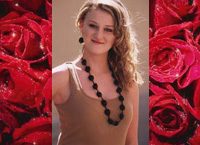
The Eye Bank is participating in the 2012 Donate Life Rose Parade Float by sponsoring a floragraph- or floral portrait- of donor, Mariah West. After Mariah lost her life in a texting while driving accident, her family made the generous decision to donate her eyes, organs and tissue through the Eye Bank and Midwest Transplant Network. Today, Mariah’s mission of helping others is being carried on through her parents’ work with AT&T’s “It Can Wait,” texting safety campaign and the Mariah West Educational Foundation. You can read more about Mariah’s story on our web site and on the float’s web site.
The Eye Bank chose to honor Mariah’s donation in memory of Darian Vanderhoofven, our fellow colleague who lost her life in the Joplin tornado. Darian worked closely with both St. John’s Mercy Hospital and Freeman Health System in their annual local rose dedication ceremonies tied to the Donate Life float. At an April 2011 Celebration of Life event at Freeman, Darian was touched by the story of Mariah’s donation after meeting her mother.
Because of Darian’s direct involvement with planning for the local hospital rose dedications and her connection with Mariah’s family, we felt that sponsoring a floragraph of Mariah would be a very special way to also honor Darian’s work in promotion of eye donation. Donate Life America has also chosen to recognize Darian by placing a rose on the float in her memory – a dedication usually reserved for donors and recipients.
This year’s float theme is “…One More Day,” which will encourage viewers to imagine one more day to remember a loved one, celebrate life, keep hope alive, and make a difference to others. The float will feature six floral clocks adorned with 72 memorial floragraph portraits of deceased donors. A large 33-foot clock tower with an animated minute hand will move backwards in recognition of the many donors memorialized in tributes in the float’s dedication garden.
Apr 14, 2011 | Donor Stories
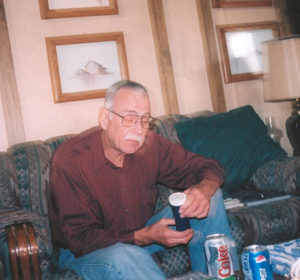
Carl had no idea he could be an eye donor until his hospice nurse shared the facts about eye donation.
One of the biggest misconceptions about eye donation is that you can’t pledge to be a donor if you have cancer, diabetes or other chronic conditions.
However, since the cornea receives its oxygen from the air as opposed to the bloodstream, almost anyone with a noncommunicable condition can give the gift of sight.
For Carl of southwest Missouri, serving others had always been a passion for him. A former taxi and limo driver who retired in 2000, Carl had long helped people get where they needed to go. In 2010, he faced a decision whether or not to help two individuals on their own journeys out of blindness.
During his battle with pancreatic cancer, Carl was enrolled in hospice care where he learned about his options for donation from his nurses. After much soul searching and discussion with his wife, Rosalie, Carl made two decisions – to donate his body for the research of pancreatic cancer treatments and cures and to donate his eyes to Saving Sight.
Because of his decision, Carl, a father of three and an avid fisherman, helped two individuals once again see their families and enjoy their favorite activities with clear vision.
Said Rosalie, “I thought it was pretty neat Carl made the decision to donate. It would be so wonderful if we all made the pledge to do it!”

Feb 25, 2011 | Donor Stories
Through correspondence, Carol was able to learn more about her son Mark’s cornea recipients.
When someone loses a loved one, it’s difficult to find the good in such a heartbreaking situation. However, for many families, eye, organ and tissue donation has given them a sense of hope. And when those families hear from their loved one’s recipients, it’s particularly rewarding.
In 2010, Carol lost her 30-year-old son, Mark. Unbeknownst to the family, Mark had made the pledge to become an eye donor through Missouri’s first-person consent registry – a move that didn’t surprise Carol.
“Mark was absolutely the most loving person that we know in our family,” she said. “He cared very much about his family – about everybody. He didn’t know a stranger. Mark was never judgmental, gave everybody a fair chance, and always tried to help the underdog.”
As Carol and her family moved through the grieving process, they received a letter from Heartland Lions Eye Banks informing them Mark’s corneas had been provided to two recipients in California. Carol wrote the recipients, introducing them to her son, and soon received letters back from both individuals. One recipient in particular struck a chord with Carol, and the two began corresponding frequently.
Explained Carol, “I can’t say enough about how his words have helped me. This man just amazes me. Even in his last letter, he said, ‘Mark and I had our stitches removed and the good doctor says our vision continues to improve. We are a good fit. There was a moment or two I did feel Mark was there.’ He couldn’t have said anything better to me.”
The recipient/donor family correspondence has not only helped in the healing process for Mark’s direct family, but for his church family as well. Carol has read letters from Mark’s cornea recipient to fellow church members, helping them to find hope desperate situations and encouraging them to follow Mark’s lead by pledging to become eye and organ donors through Missouri’s donor registry.
For Carol, the Eye Bank’s correspondence program has made a difference for her family, and therefore, she urges donor families and recipients alike to consider writing their own letters.
“I know Mark is living through this gentleman. I feel he has Mark in the palm of his hand like another grandpa, and it gives me such a comforting feeling. This man was so generous in his thoughts and words back to my family.
To learn more about writing your donor family or your loved one’s recipient, please read our Connect With Us page or contact the Eye Bank at 800-753-2265.