Industry News
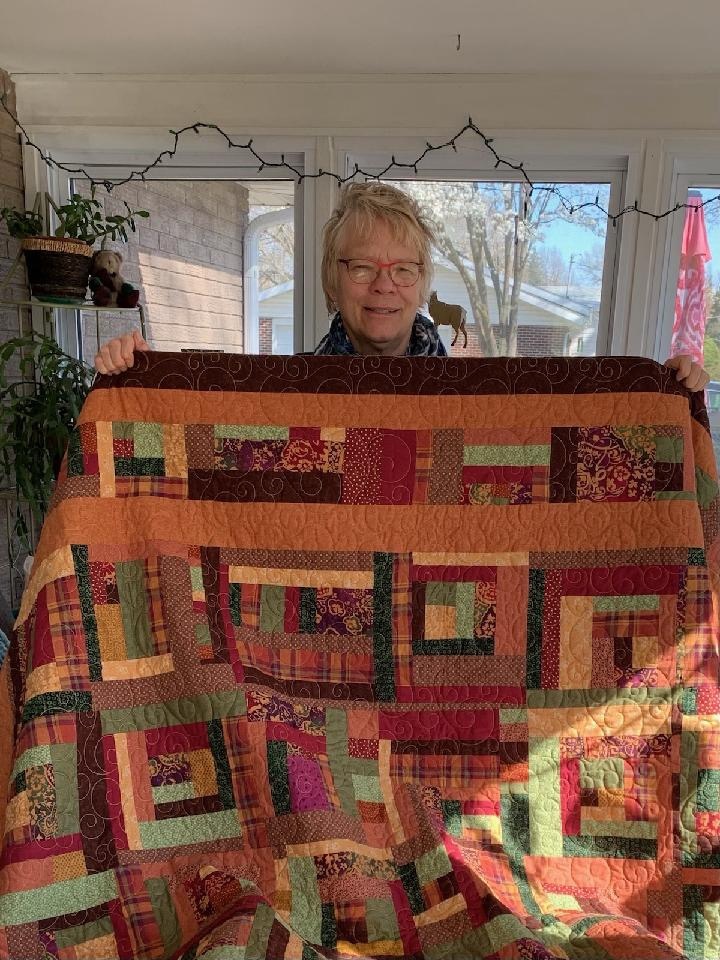
Thanks to Corneal Transplantation, Fabric Artist Creates Beautiful Quilts Again
 For Connie, the road to restored sight was a journey she wasn’t sure would happen. At first, a deep vein thrombosis (DVT) blood clot in her leg stopped the process and she had over six months of healing before she could try her eye surgery again. During her second scheduled appointment, COVID hit and shut down all elective surgeries. After waiting one and a half years, it seemed the third time was the charm, and Connie received her corneal transplants in June and August of 2020.
Awaiting Corneal Transplants
While healing from her DVT blood clot, Connie wasn’t sure if she would ever be able to have her corneal transplants because she was having trouble both walking and seeing. “I reached out to the Springfield Missouri Council of the Blind and they were a great help. They brought me magnifying glasses and books on tape through Woolford Library. Everything they do is free, and they even brought me the best sunglasses. It was so easy, and they were so kind – I appreciated it so much.”
Connie, 72, says she lives about an hour outside of Springfield on 100 acres and in a home she built about 40 years ago. The Council of the Blind came out to her house since she wasn’t able to drive. “I’m not ready to give up my land and my house. They helped me out enough that I can not only survive out here but thrive.”
Corneal Transplantation Experience
“For the last ten years, I had been dealing with Fuchs dystrophy. I think I could have lived with Fuchs a little bit longer, but my cataracts started to get really bad,” says Connie.
“My surgeon, Dr. Seagrave, was just exceptional and so was his nurse Barbara. My experience was a surgery that lasted about an hour and there wasn’t any pain involved.” Dr. Seagrave was able to perform her cataract surgery and corneal transplant surgery at the same time. “He said doing them together was the most efficient and it gave me less overall healing time. That’s why I like Dr. Seagrave, because I felt he was up to date in procedures. It was wonderful only having two surgeries instead of four.”
Life After Transplantation
“I can’t tell you how much it means to have my vision back.” Connie can get back to her fabric studio in her home. “I used to do a lot of intricate handwork. I love quilting and embroidery. I was noticing how bad my vision was getting because it was getting hard to see to do that. Now I’m able to do it again! I did an incredible quilt for my daughter this year with lots of precision cutting.”
Connie has also always been a huge reader and it was challenging for her not being able to read print. She’s happy to see to read again, though she still isn’t able to read regular print easily. She has been reading on a backlit Kindle since she was first diagnosed.
Connecting Through Saving Sight’s Correspondence Program
“I wrote a letter to the donor families. My whole philosophy of life is to just be grateful for what you have. When I had the corneal transplant, it was like getting a superpower. When this happened and it worked, I just realized how lucky I was. If somebody hadn’t donated corneas, I wouldn’t be able to see.”
“I decided to wait to write the letters until both transplants were done. I thought, what a heavy letter. I wanted to say thank you and tell them how much it really changed my life.”
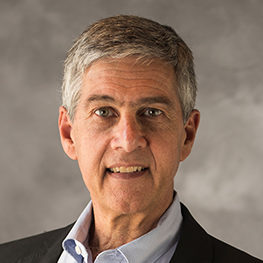
Saving Sight Medical Director Shares Insights on Use of Serum Tears in Ocular Surface Disease

Joseph Tauber, MD, presented on the use of serum tears in March
On Wednesday, March 3, ophthalmologist and Saving Sight Medical Director, Joseph Tauber, MD, presented on using serum tears therapy in ocular surface disease. The webinar was hosted by Vital Tears, an organization that offers autologous serum tears to eye care professionals and their patients throughout the nation. Saving Sight is a co-founder of Vital Tears, and processes all orders for the serum tears in its laboratory.
Dr. Tauber has an in-depth understanding of the use of serum tears in patients with ocular surface disease, as he was an early adopter of using Vital Tears in his practice. During the webinar Dr. Tauber shared insights into how serum tears fit into a treatment plan for dry eye disease, as well how Vital Tears has simplified the process for patients and physicians.
In addition to serving as Saving Sight’s medical director, Dr. Tauber is a recognized authority in the field of ocular surface diseases, including dry eye. Avidly involved in research for almost three decades, Dr. Tauber has been a principal investigator in over 125 research studies of high-risk corneal transplantation, inflammation and allergic eye diseases, corneal infectious diseases and numerous studies related to dry eye syndrome.
If you’re interested in learning more about the innovative approach that Vital Tears is taking in partnership with Saving Sight to restore sight, visit www.vitaltears.org.
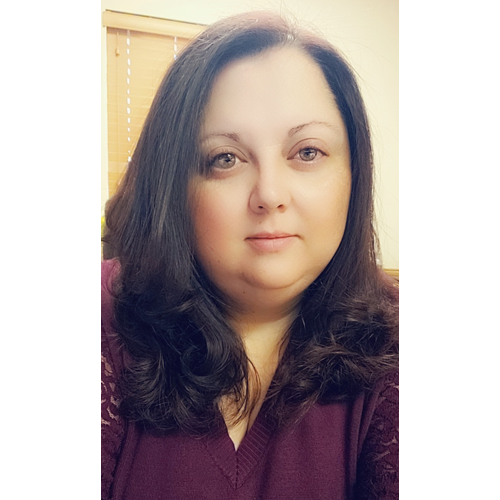
Stephanie’s Journey with Keratoconus
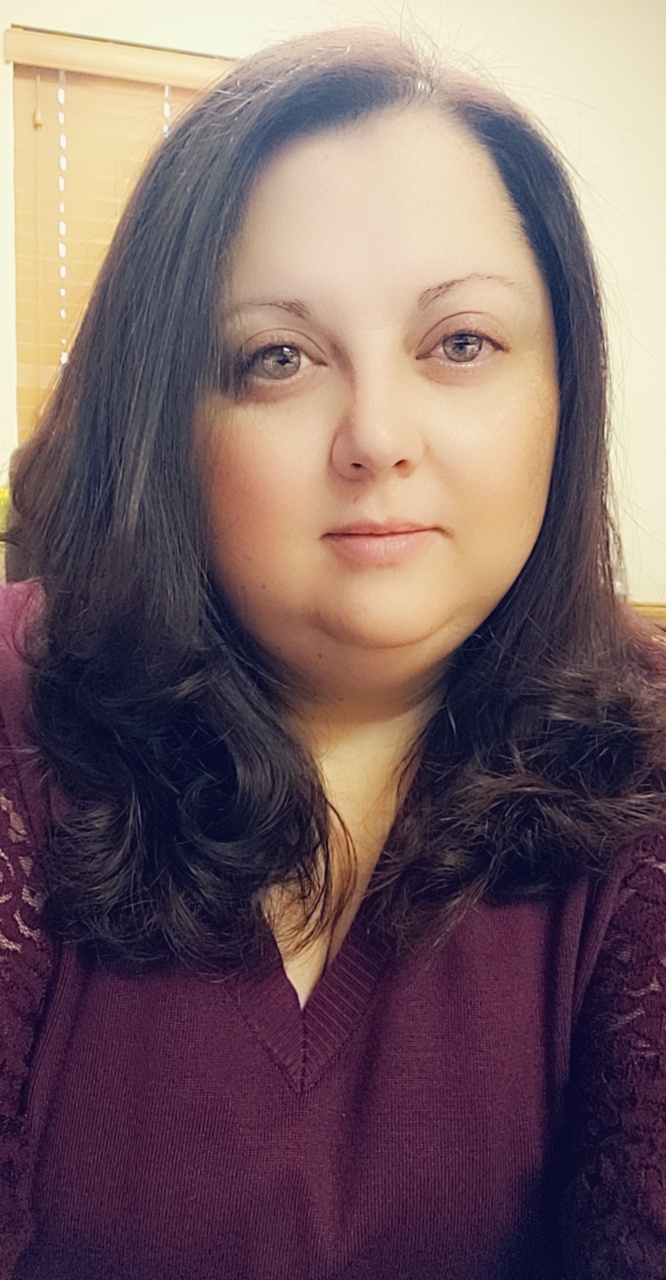 “I was diagnosed with keratoconus, which basically deteriorates your cornea,” says Stephanie. “I have the disease in both eyes, but my right eye ended up progressing a lot faster than my left and made it necessary that I have a cornea transplant.” She adds that though the thought of having her first cornea transplant was scary, it ended up being a pleasant experience.
“I got lucky and had one of the most compassionate surgeons from my area, Dr. Shachar Tauber. When I went in for my cornea consultation, I cried as I am young – I’m only 37. Going into it, it was very scary. I went in the day of my surgery feeling extremely nervous. After a few hours, everything went well, the old cornea was removed, and the new cornea put in. I left with a beautiful blue eye with 16 stitches. My son was amazed because I naturally have brown eyes and the next day, when taking the bandage off, I had a shiny new blue eye,” she says, adding her eye eventually turned back to her natural brown color.
“During my follow-up appointment, I opted to ask about my donor.” Stephanie learned her donor was a 59-year-old female. “I opted to write the family a thank you letter, but never received anything in return and that is ok because I just wanted them to know how grateful I was to them for the gift of sight.” She adds that prior to her transplant she hadn’t considered how much receiving a cornea transplant affects you mentally, especially considering how it impacts your vision.
“Many people only think about the main organs like hearts, lungs, kidneys, livers, but never really your eyes. You see, every day that I look out of my eye and I can see and I can’t help but think of my donor and her family. Because she and her family opted to be a donor, I now can see. I can see to craft, I can see to drive, I can see to work, and most importantly I can see to watch my son grow into a young man.”
“I don’t think people truly understand the importance of being an organ donor. It can help save lives, but it can also be just as important to someone else who needs an organ as small as a cornea…because of someone else I am able to see, and I will forever be grateful.”
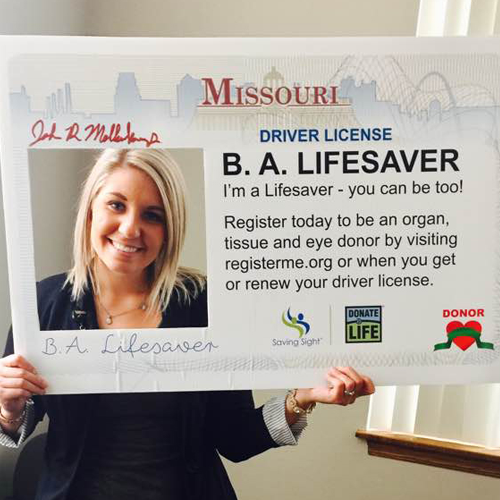
Hospital Development: Their Role in the Donation Process
Saving Sight is committed to working with hospital partners across our region to facilitate the gift of eye donation. From supporting each donor family to maximizing every opportunity for donation to occur, we couldn’t make corneal donation and transplantation happen without our partners. A key component in our success in working with hospital partners lies in the work of our Hospital Development team.
Hospital Development (HD) is responsible for developing and implementing strategies to ensure Saving Sight and its donation partners carry out a lean and effective donation process, maximizing the opportunity for donation to occur. Our Hospital Development Managers oversee HD territories and manage relationships with assigned donor hospitals and other area partners that we work with to facilitate eye donation. They work with hospital staff from leadership to chaplains to nurses and physicians, and also work with medical examiners, coroners, investigators, funeral home directors, organ procurement organizations, and the general public.
Working with these partners allows the HD team to build and foster relationships that drives a strong foundation for donation. A large part of that is being a liaison and advocate for the partner and donation, as well as providing education opportunities on the process and about donation in general. Though our HD Managers meet with partners in their territory all year round, November and April are huge months for the team. November is Eye Donation Month and Saving Sight joins the Eye Bank Association of America and eye donation community in honoring and celebrating the gift of sight. April is National Donate Life Month and Saving Sight joins the Donate Life community and other organ, eye and tissue procurement organization nationally in honoring the legacy of organ, eye and tissue donors and celebrating the gift of life for recipients. Both observances allow our team to say a special thank you to our partners for their work in the journey and to share inspirational stories of hope and healing through donation with them.
Meet Our Hospital Development Team

Darcey Ross
Territory 1 & 2
816-255-1373
Kansas City, MO

Haley Lyne
Territory 3
417-569-1270
Springfield, MO

Tori Weiss
Territory 4
314-584-1712
St. Louis, MO
Hospital Development Territory Map

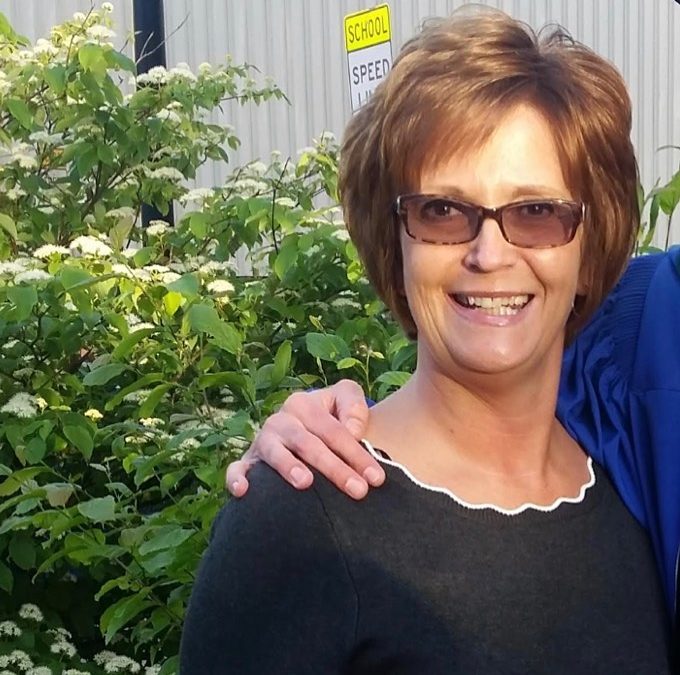
Jackie’s Story
“I was diagnosed with Fuchs Dystrophy in 2007, in 2010 I had corneal transplants in both eyes. In September 2020 I needed a cataract removed in my right eye which lead to another cornea transplant. I am so grateful for cornea donors. I wouldn’t be able to see without them.” 

Share Your Story with Saving Sight
Have you benefited from one of Saving Sight’s programs? If so, we would love to hear how it made an impact on your life. Each year, Saving Sight’s vision programs change thousands of lives, and our recipients’ stories are one of the most powerful tools we have to communicate our mission. When we can illustrate our mission well, we can help even more people.
If you’re interested in sharing your story for our communications, please fill out the form on this page to let us know a little bit more about your experience. Afterward, a Saving Sight representative will contact you with more information about how you can become an advocate for our sight-saving work.
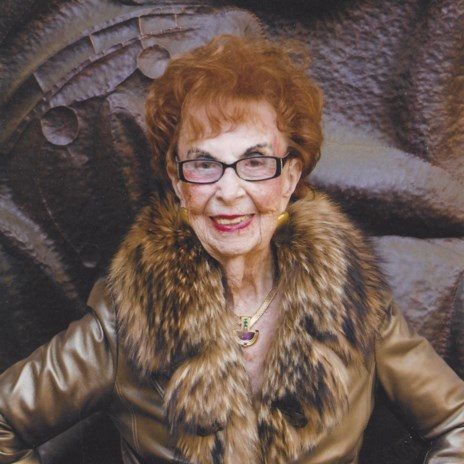
In Memory, An Artist’s Gift
Kansas City artist, Gabriella Mountain, was most well known for her larger-than-life abstract sculptures, mosaics, and stained-glass pieces. As an artist, she was diverse in her craft, creating commissioned works throughout the Kansas City area, including the old Main Library’s mosaic floor at 12th and McGee and the stained-glass windows at the Whiteman Air Force base chapel. Gabriella lived a remarkable and storied life, beginning in Hungary in 1918. After fleeing from war-torn Europe at the end of World War II, she came to America and started her life and career as an artist in the City area.
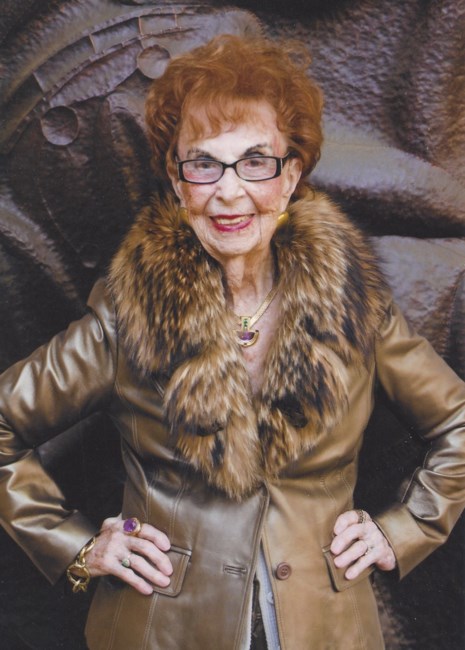
Gabriella Mountain, via Dignity Memorial

Dragons repousse door, via KCStudio
While she was a well-established and awarded artist, Gabriella’s struggle with vision loss was lesser-known. After suffering from Fuchs’ Corneal Dystrophy for years, Gabriella received a sight-restoring corneal transplant surgery in March of 2013. While she was 95 years old, the transplant improved her vision, allowing her to continue creating beautiful works of art. In her later years, Gabriella transitioned from creating metal sculptures to abstract textile and fiber art.
After a long and beautiful life, Gabriella passed away in May 2020 at the age of 102. In gratitude for the gift of sight, she left a gift to Saving Sight to continue our work restoring sight to others. We remember Gabriella in memoriam for her vision as an artist and her vision to serve others by supporting Saving Sight.
If you are interested in making a gift to change lives by Saving Sight, please visit saving-sight.org/give or reach out to our communications team to discuss leaving your legacy with a planned gift.
Jon’s Legacy

In memory of Jon Earwood, 1994-2020
“Jon was a kind and genuine man. He always had a smile on his face. He loved being outdoors fishing or riding his motorcycle, singing and playing his guitar, and spending time with his family and friends. He loved his job as a welder helping the farming community. But most of all he loved being a dad to his son Thomas.” – Ashton
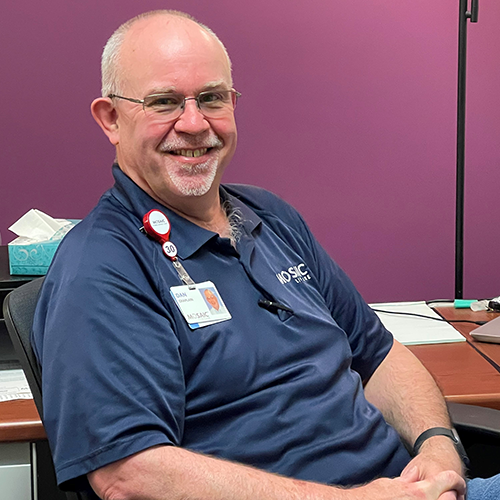
Champion of Donation – Chaplain Dan Mefford

Chaplain Dan Mefford
Dan Mefford has served as a Chaplain for Mosaic Life Care Medical Center in St. Joseph, Missouri for 30 years. “Part of my role here, as all of ours are, is to respond to all end-of-life care crises,” says Chaplain Dan. “We are a part of what they’re going through and are there for the families as well.”
At Mosaic Life Care, the chaplains also serve as the designated healthcare directive educators. When working with families about the healthcare directive, often questions about organ, eye and tissue donation and the individual’s wishes are brought up along with questions about what is available to them.
As the lead chaplain for Mosaic Life Care’s ER and ICU, Chaplain Dan is involved with both Midwest Transplant Network and Saving Sight in the donation process. “Primarily, I work with Midwest Transplant Network and then they connect us to Saving Sight for eye donation,” says Chaplain Dan.
“Our connection is really one of partnership. We have open lines of communications where we can talk to each other. We try to be the liaison to help Saving Sight and Midwest Transplant Network through the process. We are a link between them and the family during this time. Sometimes Saving Sight might reach out to us to ask how the family is doing in their time of grief before they call the family to talk about donation. If the family asks me who Saving Sight is about a missed call, I can let them know to talk with them and that Saving Sight can help you with the donation journey.”
He adds that he values his partnership with Saving Sight and Midwest Transplant Network for a couple of reasons: “One, we couldn’t do it without them. The donation process is way beyond what we are capable of by ourselves,” he says. “Their partners are trained to have these conversations as designated requestors. Two, I also value that we are partners. They look at us as partners in this journey and ask how do we make this happen so everyone comes out ahead. Never have I felt like a pipeline in the journey either. They see us as an integral part of what they are going through and that gives me a good feeling working together.”
“Chaplain Dan is such an incredible advocate for donation,” says Darcey Ross, Hospital Development Manager at Saving Sight. “Not only for the individuals who have made the decision to donate, but he is such a source of comfort and support for the grieving family members as well.”
Chaplain Dan stresses the importance of talks about organ, eye and tissue donation before the end-of-life-care journey as well. “I think it’s very, very important. Obviously, we can’t approach anybody about donation as chaplains because we aren’t’ designated requestors – that is Midwest Transplant Network and Saving Sight’s role. But a lot of times people will ask me what I know and think about donation. I think it’s even more important before end-of-life care. It’s essential to talk to the family and make your decisions known ahead of time.”
He adds that being educated on donation and having your wishes known is vital in giving people the chance to live or see again when someone else dies.
“I’ve had friends who have received organs or tissues and are living their life now because of it. I recall one family very early in my career here. Their loved one died, and they came to me and said he was a Lion and wanted to donate. They asked, ‘how do we make that happen?’ This impressed upon me during that conversation that donation isn’t a small thing; it means a lot,” says Chaplain Dan.
“I’ve seen the lives that are changed through donation. And in the people who have donated their loved one’s tissues, their sense of helping someone else because their loved one is making a difference. It sends shivers down your spine to see how much it means to the family in their grief to donate – it’s a healing experience for those who are grieving.”
“The donation process changes a life – with eye donation, up until that point the recipient could literally be seeing darkness. For the donor family it gives them a sense that their family member is continuing to help others through the processes of life,” says Chaplain Dan.
For those families in the grief process after donation, Chaplain Dan offers comfort and support. “If the family is still here once a donation decision is made, we can reinforce that they’ve helped someone else. I see folks out in the community when it’s over and they’ll want to talk about that. It’s an affirmation for them of the gift they gave to someone else. It lets them know that there are people out there who truly are grateful for the gift they have received.”
#GivingTuesday
Make a Lasting Impact
On Tuesday, December 3, Saving Sight will join nonprofits all over the world in a global movement of generosity for Giving Tuesday. We hope you’ll join us in making a gift to support our work in preserving and restoring the sight of others.
Your financial contribution to Saving Sight allows us to continue the important work of educating about eye donation in the communities that we serve. With your support, we’re able to continue to fill our eye, organ and tissue donor registries so more transplant recipients receive the gift of sight. Together, we can engage communities and partners in saving sight for others.
Are you ready to make your impact? Consider making a financial gift today of any amount to help us change lives by Saving Sight.
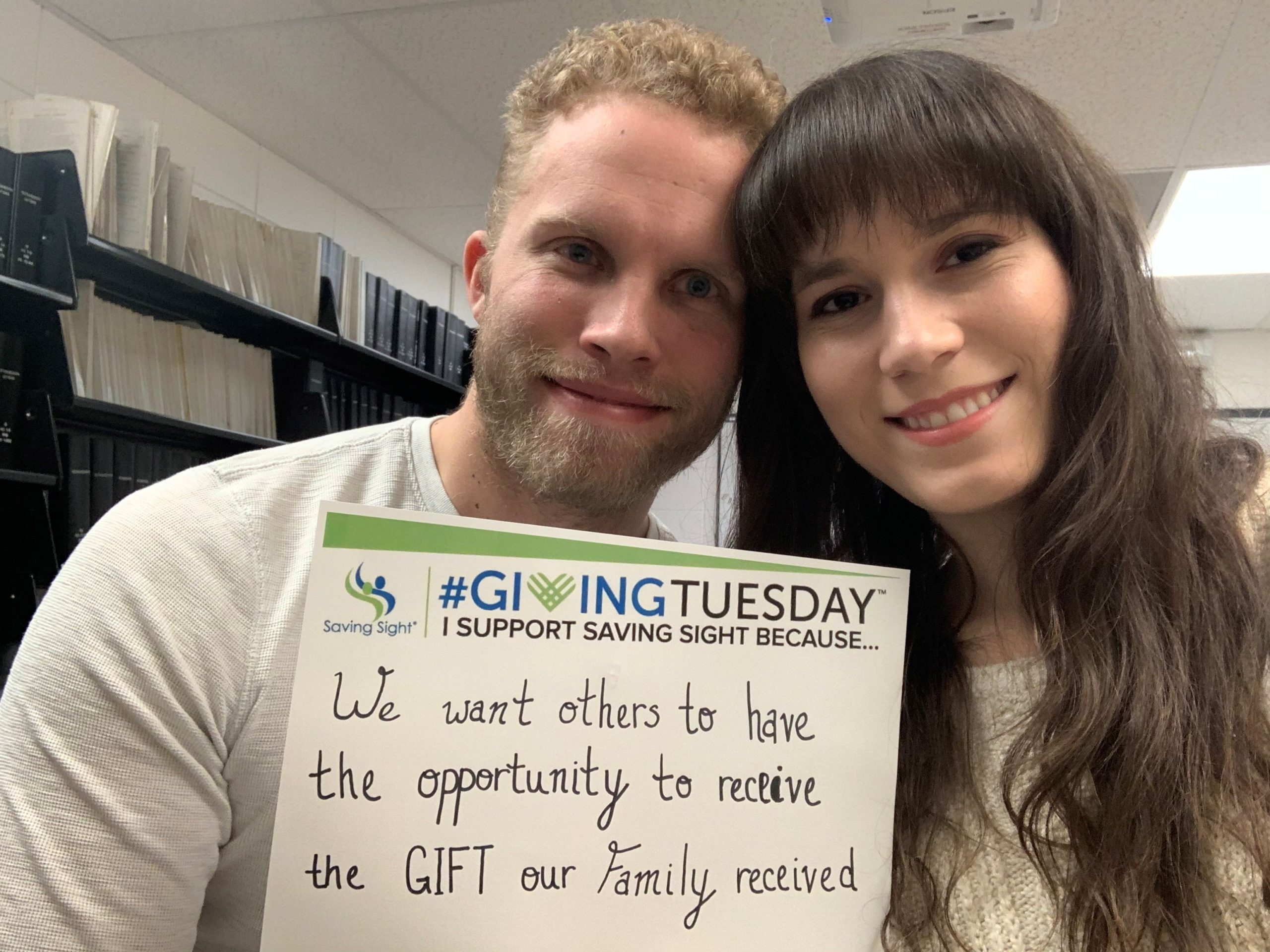
Share An Unselfie!
Show your support of our mission on #GivingTuesday by sharing an “unselfie” on social media. Download our template here and share a little with us about why you support our mission.
Countdown to #GivingTuesday!
Day(s)
:
Hour(s)
:
Minute(s)
:
Second(s)
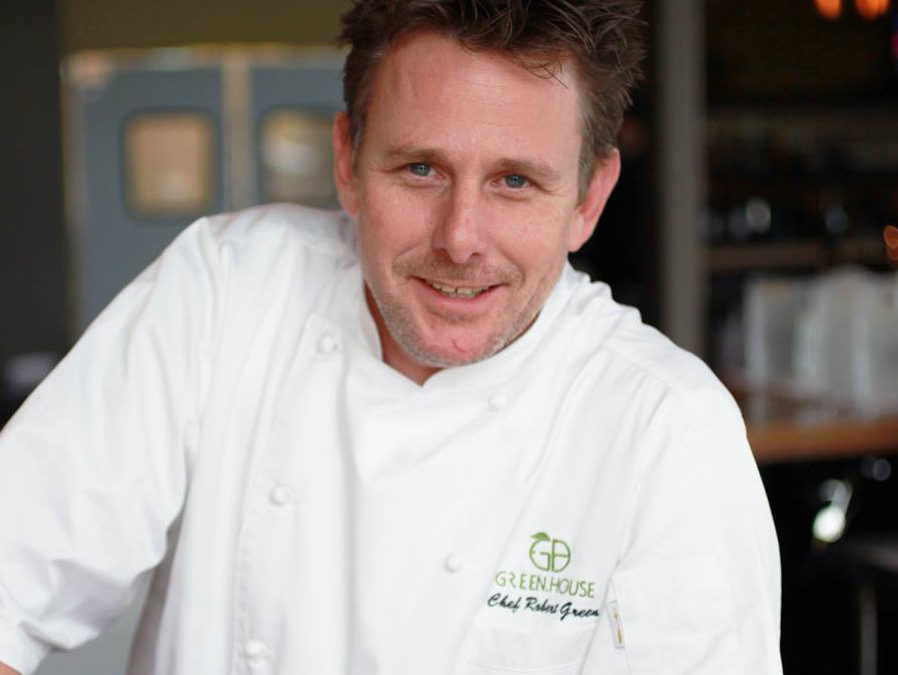
Staff Member Gains New Insight Into the Gift of Donation
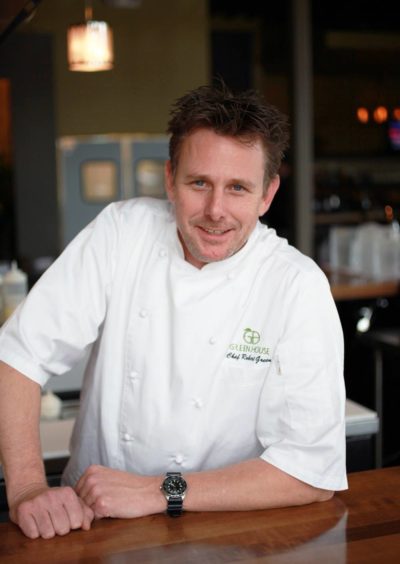
Robert was a professional chef and at his best self when he was in the kitchen.
“My dad was the biggest dork,” Abby recalls. “He was always the one to make somebody laugh.”
Robert was one-of-a-kind, with a dark sense of humor and a passion for culinary arts and cooking. He worked as a professional chef and was his best self in the kitchen. While Robert’s journey in life wasn’t easy, Abby remembers one-on-one time cooking with her dad in the kitchen and, most of all, feeling that “… I never didn’t know love.”
On November 20, 2014, Robert died unexpectedly from cardiac arrest due to an overdose. Abby was only 19 at the time and had just started college a few months earlier. While much of the time shortly after his death was wrought with the pain of sudden loss, she distinctly remembers the conversation around his tissue donation. For years, Abby felt a powerful sense that her father had a message for her, and even had a vivid dream about him where he gave his heart to her.
Fast-forward six years, and Abby had accepted a job role in Saving Sight’s Human Resources department. As she was exposed to the eye bank’s sight-saving mission and heard stories from transplant recipients and donor families, Abby’s curiosity about her father’s donation grew.
“Being here, I wanted to know if my dad was able to impact somebody’s life,” says Abby. “It was definitely a full-circle moment.”
This fall, Abby connected with the Aftercare team at SightLife, the local eye bank in Washington state that helped facilitate Robert’s gift of eye donation in 2014. She quickly learned that her father gave the gift of sight to two individuals in Japan. Abby finds special meaning in this, knowing that Robert used to get a lot of his culinary inspirations from Japan, as well as had love for the original Iron Chef show from the 90’s.
Abby also learned from the local organ procurement organization, LifeCenter Northwest, that her father helped 57 people total through eye and tissue donation. Among those people is a 12-year-old girl who needs orthopedic surgery, a 78-year-old who required spinal surgery, and a young girl in Arizona who received a life-saving heart valve.
That’s right. Remember Abby’s dream about her father’s heart? She finds special significance in this now, knowing that his donation was life-saving for a heart tissue recipient.
Today is the 6th anniversary of Robert’s passing and Abby has found a new sense of connection to the gift of donation. Although no easy task for any donor family, she is working on writing a letter to his recipients to share more about who her father was and his legacy. She is also planning for a new tattoo that will pay homage to her father’s love of cooking and his lasting gift through eye and tissue donation.
Get the Latest in Your Inbox
Sign up below to receive Saving Sight’s quarterly round-up of industry news straight to your inbox. We will never share your information with third parties and you may unsubscribe at any time.