Industry News
Carthage Humanitarian Helps His Community in Life and in Death
Recognized throughout the community for his volunteerism, Thomas continued to impact the lives of others after he passed.
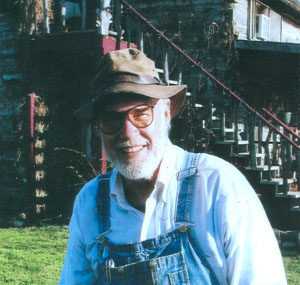
Throughout his life, Thomas of Carthage, Mo. took care of his community by donating his time, money and experience to help those in need. It was only fitting after his passing that he continue to improve the lives of others – thanks to Thomas’ pledge to become an eye and tissue donor, he gave the gift of sight to two cornea recipients and helped as many as 50 individuals who benefited from bone and skin grafts.
As an attorney-at-law, father of three and local humanitarian, Thomas played a role in strengthening communities throughout Southwest Missouri. He was instrumental in helping numerous nonprofits in Carthage, Joplin and Neosho get off the ground, and worked as a child advocate through the Court Appointed Special Advocate (CASA) program in Joplin.
Thomas was best known throughout Carthage for using his legal experience to help the underprivileged. Said his wife, Carol Ann, “Thomas was described in the community as a ‘good old country lawyer.’ He went the extra mile and often worked out special deals with those who couldn’t afford legal help. If all someone could afford was $5 a month, that’s what he would charge them.”
Thomas was also an active Missouri Civil War Foundation board of directors member, an avid fisherman and a gardening enthusiast. In fact, his garden was recognized throughout the community, since according to Carol Ann, “Anybody could come by and pick whatever they wanted.”
Knowing Thomas’ caring spirit, it came as no surprise to Carol Ann when Thomas made the pledge to become an eye, organ and tissue donor by signing the back of his driver’s license. After he passed away from a heart attack in 2008, Carol Ann had no reservations regarding the donation decision.
“Donation was what Thomas would have wanted. There was absolutely no hesitation on his part to be a donor. It was his wish, and I was going to honor it. Even though he had cataracts, he was able to donate his corneas to someone in Wisconsin and another person outside the U.S.”
Like the hundreds of lives Thomas impacted each day through his tireless efforts in the Carthage community, dozens of individuals saw their lives improve through his final generous gift – a gift that brings consolation to his wife and those who knew him.
“Understanding that Thomas helped people through his donation was comforting, especially at the beginning,” remarked Carol Ann. “I know he is still able to live on in so many different ways.”
The Carthage Press and The Joplin Globe both ran wonderful articles in December 2010 on Thomas’ life and donation.
How an Internet Search Saved One Man’s Sight
After searching for a treatment for his Fuchs’ dystrophy online, Larry and his wife discovered DSAEK.
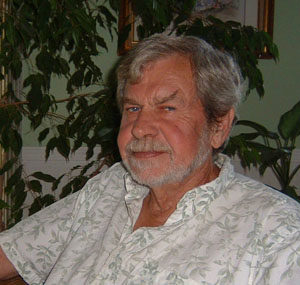
Five years ago, Larry of Fair Grove, Mo. was diagnosed with Fuchs’ dystrophy, a deterioration of the inner layer of the cornea. While eyeglasses and eye drops helped, his eyesight continued to decline – to the point he could no longer read and had difficulties performing his job as a handyman.
“My sight interfered with my work,” Larry remarked. “I needed an extreme amount of light. I would have to aim a spotlight right on the project to be able to do anything.”
Larry’s optometrist suggested a full cornea transplant to replace his damaged cornea, but the surgery’s long recovery time concerned this active senior. After researching Fuchs’ dystrophy on the Internet, Larry’s wife discovered that normal transplant surgery involved a full year recovery period which would be quite a hardship. Then she happened upon a website for other individuals with Fuchs’ dystrophy to share their experiences. One woman had shared her transplant experience performed by a doctor in Springfield, Mo. who was trained in the latest cornea transplant procedure developed by a doctor in Indiana. Descemet’s stripping automated endothelial keratoplasty (DSAEK) is a 30-minute surgery where only the inner layer of a donated cornea is replaced, requiring fewer sutures, less pain and a shorter recovery time. Larry had found his solution.
In 2008, after undergoing cataracts surgery, Larry underwent his first DSAEK corneal transplant performed by Dr. Shachar Tauber in Springfield, followed by a second surgery one year later. Said Larry, “My overall sight has come back pretty well. I still need glasses to read, but it’s a great improvement. I’m pretty impressed with my surgeries and my recovery.”
Today, Larry, who recently celebrated his 70th birthday, is back to work as a handyman and spends his free time reading and fishing. “My transplant has made life a lot more enjoyable!”

Jackson Woman Undergoes LifeChanging Corneal Transplant
After her corneal transplant surgery, Annie is back to reading and working part-time.
Eyesight is something most of us take for granted – until it is lost. Once vision begins to fade, it can affect all aspect of one’s life – from managing duties at work to simply seeing the face of a friend.
Annie of Jackson, Mo. knows the impact of vision loss first-hand. This married mother of two and grandmother of three began experiencing blurred and hazy vision. She had difficulty reading and was unable to recognize people standing in front of bright light. In May 2009, she was diagnosed with Fuch’s dystrophy, a genetic corneal disease that progressively steals one’s sight, in both of her eyes. Her only option for recovery was a corneal transplant using tissue from an eye donor.
On August 5, 2009, Annie underwent an endothelial keratoplasty on her left eye as an outpatient at St. Francis Medical Center in Cape Girardeau. Said Annie, “Surgery was painless, and the recovery was quick. The only hard part was having to lie flat on my back for 24 hours after surgery, but it was worth it. My eyesight has improved so much!”
Since her surgery, Annie’s blurry vision is gone, and she is back to reading. She can even make out the faces of her friends and family once again. Her improved sight is especially helpful since this retired medical secretary continues to work part-time helping others through Comfort Keepers – an in-home service for the elderly.
Like all transplant recipients through Heartland Lions Eye Banks, Annie was offered the opportunity to correspond with her donor’s family. “When I received the letter, I didn’t know if I wanted to do it. But the more I thought about it, I owed it to the donor’s family – to let them know how much they have helped me and how grateful I was. Since then, I’ve received two letters from the donor’s mother. The first one made me shed a few tears. Her son was a young man who owned his own welding shop. She told me anytime you see a spark in your eye, it’s from my son.”
Annie is very appreciative of her donor’s family as well as Dr. Parker and his entire staff. After seeing the results of surgery and the changes it can bring, she is an avid proponent of eye and tissue donation.
“I’ve always thought about donation, but after going through the surgery, it really has made a believer out of me. I would definitely encourage everyone to register as an eye donor.”

Volleyball Star Returns to the Court Thanks to Her Eye Donor
“Now my eyesight is almost normal with a contact on, and playing sports is fun like it used to be. I don’t get looked at weird when people are talking to me, and I don’t have pain any more. Because of my donor, I can finally live my life how I want, without anything bothering me.
The need for a corneal transplant can occur at any age, for a number of reasons. For Kelsie of Kansas it happened in the prime of her young life – just as she was entering her teen years.
Kelsie, an active volleyball and soccer player, began experiencing problems in her eye. After visiting five doctors, she was finally diagnosed with a parasitic amoeba, contracted from contaminated water, such as from a pond of a hot tub. To treat the condition, Kelsie had to take eye drops every hour of the day, but even that didn’t cure the problem.
Said Kelsie, “My condition kept getting worse. It turned into a white blister on my eye, and I could barely see through it. It made playing sports a nightmare.”
Kelsie underwent a sight-saving corneal transplant in to rescue her diminishing vision. Although her recovery is still ongoing, Kelsie was able to get up and about within three days of surgery. Today, as a high school student, Kelsie is back on the playing field – but this time she returns with clear vision. “Now my eyesight is almost normal with a contact on, and playing sports is fun like it used to be. I don’t get looked at weird when people are talking to me, and I don’t have pain anymore. Because of my donor, I can finally live my life how I want, without anything bothering me.”
Kelsie and her family are grateful to her donor family for their generosity in a time of despair. To thank them for their donation, Kelsie, like many Saving Sight cornea recipients, wrote a heartfelt letter to the family.
Kelsie’s mother, Jodie, was especially touched by her daughter’s letter, “Honestly, the worst day of the entire ordeal was the day the nurse was explaining where the donor cornea would come from. It led to some revealing answers for Kelsie – that her donor needed to be near her age. It was very difficult for her to hear that, really for all of us, and I think that’s the day she decided that she wanted to show her appreciation for the generosity of this family that didn’t know her, didn’t know us, but was truly giving her back her life as she knew it.”
Together, Jodie and Kelsie encourage Kansas residents to join the state’s donor registry. “Registering as a donor is the single most selfless thing a person can do,” remarked Jodie. “You can’t imagine the changes and opportunities you can make for someone else in need. I have always been a donor, but it takes on a whole new meaning when someone you love is a recipient.”
Dorian’s Gift
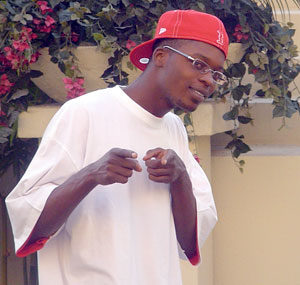
Dorian of Kansas City was known for his big smile and bigger heart. “My son loved life, but in a tragic moment his life was cut short and, as a result of that, someone else’s life has now been enhanced,” said Wendy. Thanks to the family’s donation, two cornea recipients received the gift of sight, including an infant who was facing a lifetime of corneal blindness. Remarked Wendy, “In my letter to Dorian’s recipient family, I let them know how he loved children and how fitting that a child received one of his corneas.”
A Dream to Help Others Lives On
Dorian, an Eye Bank employee, was always dedicated to helping others.
Dorian of Kansas City was known for his big smile and bigger heart. As a recent high school graduate, Dorian was planning on becoming an EMT so that he could help others. “Dorian liked to help people,” said his mother, Wendy. “I think he also liked the thought that the job would be exciting and there would be an adrenaline rush from it.”
Dorian’s passion for assisting those around him was so strong, he even began working alongside Wendy at Saving Sight as a logistics specialist, helping to facilitate the cornea transplant process.
Unfortunately, Dorian’s dreams were cut short in 2008 when he lost his life in a car accident as he was driving a friend to the hospital. Yet, his mission of helping others carries on. After seeing first-hand the impact eye donation has and knowing of Dorian’s caring spirit, Wendy and her family made the difficult decision to donate Dorian’s eyes, bones and tissue.
“We’re a family that cares for others,” said Wendy. “I’ve taught my children to always consider the needs of others and not to be selfish. As far as considering donation, there were limitations as to what we would donate and as long as those limitations were respected, then we didn’t have a problem.” Dorian’s father, Darryl, agreed, “As painful as it was to lose him, I’m glad that Dorian’s gift was able to help others.”
Thanks to the family’s donation, two cornea recipients received the gift of sight, including an infant who was facing a lifetime of corneal blindness. Remarked Wendy, “In my letter to Dorian’s recipient family, I let them know how he loved children and how fitting that a child received one of his corneas.”
To learn more about becoming an eye donor or to read about the multicultural perspectives of donation, please visit www.donatelife.net.
Teen’s Compassion Carries On
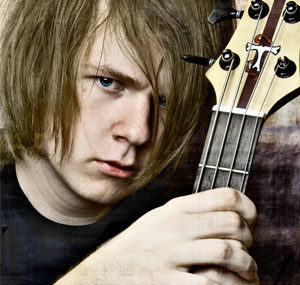
Jake was known for his talent and his compassion.
Throughout his short life, Jake of Chatham, Ill. was known for his sense of humor and his unwavering loyalty to his friends. According to his mother, Barbara, Jake was always the first person to jump in whenever anyone needed help.
After a car accident claimed the life of her 18-year-old son, Barbara was asked if she would consent to donating Jake’s corneas and skin to help others. In the midst of a devastating tragedy, Jake’s parents made a compassionate decision from their hearts, just as Jake would have, and agreed to donate.
“I thought something good should come from a tragedy,” she said. “We had never talked about organ donation – I mean, you never expect your 18 year old to die – but I knew donation is something he would want.”
Jake had just graduated Williamsville High School with honors before his accident. During his high school career, he was an Illinois State Scholar and a member of the National Honor Society. In addition, Jake, a talented bass player, also incorporated his love of the arts into his school activities. He was king of his madrigals group and performed in school musicals, including his favorite role as of Horrors. An active member in the school’s vocal music department, Jake even sang for President Obama in 2009 as part of his school’s vocal jazz choir.
However, Jake’s greatest love was film. Remarked Barbara, “He loved movies and knew more about movie trivia than anyone I’ve ever met.” In fact, Jake had a full academic scholarship to Southern Illinois University at Carbondale to study filmmaking in order to prepare for a career as a director.
While Jake’s dreams were cut short, his kindness for others continues to live on – both through the lives of the hundreds of people he touched in his 18 years and through the eyes of a cornea recipient in California who can now see thanks to Jake’s family’s generous gift.
Illinois Eye Donor Continues to Help Others
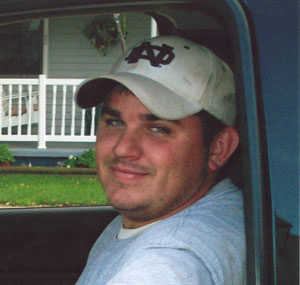
Cody had a big heart and would do anything for anyone.
A father. A husband. A brother. A son. Cody Dunham is many things to many people. To the recipients of his corneas, his skin and his bones, he is a true hero.
In January 2009, when 30-year-old Cody of Divernon, Ill. lost his life in a car accident, his family was faced with the decision whether or not to donate his tissue to others. Because of Cody’s caring personality and his wish to become a donor, his family chose to change another’s life through the miracle of transplantation.
Said his mother, Bonnie, “Cody had expressed interest in becoming an organ and tissue donor to all of us, even though we didn’t discuss it too much. We knew that’s what he wanted.” His sister, Tara, agreed, “He was kind of gruff, but would do anything for anyone and had a huge heart.”
Throughout his life, Cody was dedicated to taking care of those around him. When he wasn’t spending time with his family and friends, Cody was helping others in his community. Cody volunteered as a fire fighter for the Pawnee Fire Protection District in his twenties and spent time helping area farmers during the planting and harvesting seasons.
Cody was obsessed with NASCAR. The passing of his idol, Dale Earnhardt, hit Cody especially hard. “I remember when Earnhardt passed, I never knew someone could be that upset about a person they didn’t know personally,” remarked Cody’s wife, Scarlett. “Cody was pretty passionate about the things he cared about.” In addition, Cody, an avid sports fan, followed Notre Dame, the Oakland Raiders and the St. Louis Cardinals, as well as loved gambling and playing poker with his friends.
At the time of his passing, Cody worked at Rettberg’s Inc. in Divernon, installing furnaces and air conditioners. “They all loved him there,” said Bonnie. “After he died, the company sent a letter to over 1,000 of their customers, letting them know about Cody since he had worked in their homes. The response was amazing. Many customers wrote back saying they remembered Cody and contributed donations to his son Kasen’s college fund.”
It’s no wonder Cody continues to change lives after he lost his own. According to Bonnie, Cody helped save the eye of one of his recipients. “In her case, she didn’t get her sight back, but because of a hole in her cornea, she would have lost her entire eye. Cody’s cornea healed her eye. It’s like Cody is still alive, and a part of him is with her. I just can’t wait to meet her someday.”
Cornea Transplant is Music to One’s Ears
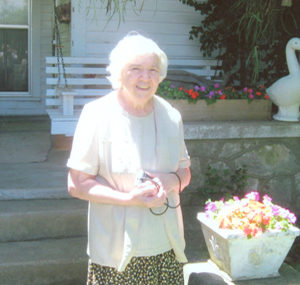
Elizabeth was able to return to playing
the piano after a cornea transplant restored her sight.
As a gifted piano player, Elizabeth often entertained seniors at a senior housing facility in Neosho, Mo. But as her eyesight began to fail, she faced difficulties playing all the requests. “I would play by ear many of the songs the residents wanted me to play, but if I picked up a music book or hymnal, the notes were too blurry to see.”
According to her eye surgeon, Elizabeth had simply outlived her corneas. For this active 75-year-old, the diagnosis was upsetting. In addition to affecting her piano playing, Elizabeth’s vision loss forced her to give up driving and her artwork as well as inhibited her ability to type and read.
Elizabeth finally underwent a corneal transplant on her left eye in summer 2010, which required donated corneal tissue. Although the cornea detached the day after her initial surgery and required an additional operation soon after, Elizabeth’s recovery was incredibly smooth. More important, it restored her lost vision.
Today, according to Elizabeth, her eye sight is better than it was even when she was young. Her left eye is 20/30, and she can read most print without wearing reading glasses. “My cloudy vision had slowly shrunk my world as I aged, but now my vision is so clear that I can once again read music, draw, sew, write and drive!”
Elizabeth chose to write to her donor family though Saving Sight’s correspondence department to thank them for their generous gift. “I wrote because I was so grateful. I thought that was really great they donated their loved one’s cornea to help someone else. It was very caring of them to do that, and I appreciate it so much.”
Not only is Elizabeth pleased with her restored sight, but so are the seniors who once again are able to enjoy her musical talent.
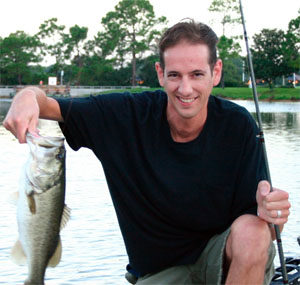
Fish Have Someone to Fear After Recipient Regains His Sight
Chris was able to return to fishing after his cornea transplant.
Tying a fly for fly fishing can be difficult for someone even with 20/20 vision. But for an individual suffering from a blinding eye condition, the challenge can be downright impossible, stealing away the joy of a sport he once loved.
For years, Chris of Kansas City had been suffering from eye problems that left his vision compromised. “Everything was a big haze,” he remarked. “I would see ghost images, like four or five visions of the same chair. There were a lot of halos, a lot of flares, rings around taillights. The haze filled up my whole vision, making it hard to do anything.”
In his early 20s, Chris was diagnosed with keratoconus, a disorder that causes the cornea to become distorted. Chris was fitted with hard contacts to correct his eyesight, but as he grew older, the contacts became more cumbersome while his vision continued to deteriorate. Keratoconus affected his job in I.T., limited his ability to drive, and worst of all, affected his passion for fly fishing.
The Escape from Blindness
Finally, in 2004, Chris underwent a cornea transplant on his left eye under the care of Dr. Joseph Tauber of Tauber Eye Center. Although the first three weeks of his recovery were highly uncomfortable, Chris now has 20/20 vision when he wears a soft contact.
Said Chris, “Everyone wonders – how do you do that? You actually got your eyeball cut open? I think one of the reasons people don’t get the cornea transplants they need is because it’s a scary thought, but it’s so worth it in the long run. There’s nothing I wouldn’t have done to get my vision back.”
The first cornea transplant went so well that Chris underwent his second in 2009. “Although my vision’s not back 100%, it’s amazing I have 20/40 vision even without my contact on. I’m not there yet, but I’m better than I was.”
While Chris has been blessed with better eyesight, the journey has been bittersweet. Because of his condition, Chris’ donors had to be younger than the recipient and the corneas less than 72 hours old. “It’s such a double-edged sword. What’s good for somebody like me meant something bad had to happen to someone else. The hardest thing is knowing what another family was going through.”
Today, thanks to the gift of his donor families, the talent of Dr. Tauber, and the support of Chris’ optometrist, Dr. Jill Smith of Precision Optics, Chris is back on the water and enjoying his favorite sport. Only now it’s the fishes’ turn to be concerned about Chris’ vision.
Click here to watch Chris’s interview.
Get the Latest in Your Inbox
Sign up below to receive Saving Sight’s quarterly round-up of industry news straight to your inbox. We will never share your information with third parties and you may unsubscribe at any time.