
Three-Time Cornea Recipient Continues Working Thanks to the Gift of Sight

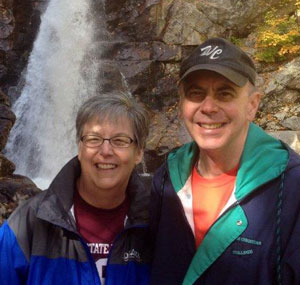
David and his wife Jennifer.
Working in higher education, David’s job requires him to do detailed, number calculations. Because of the generous gift of sight from three donors, David can continue his work. “It is vital that I am able to differentiate between 5’s & 6’s and 3‘s and 8’s,” said David. “Thank you for making it possible that I can continue to work and provide for my wife and me.”
David received his third corneal transplant in January 2017. “I have keratoconus where the cornea grows into the shape of a cone rather than being round,” said David. The disease distorts the vision until it eventually cannot be corrected with glasses or contacts. His most recent transplant was because keratoconus distorted the original transplant in his eye after 23 years. “I have had three cornea transplants. The first was very painful and uncomfortable. Though a ‘success,’ the result was not as satisfactory as hoped. The last two were much more comfortable and recovery was easier,” said David.
Several areas of David’s life have been enhanced because of his corneal transplants. He’s able to continue working, read, watch TV, drive, and watch his daughters graduate from college and begin their adult lives. David added that without the transplants, he would be functionally blind. “The most recent transplant has not healed enough to provide better vision; however, it should eventually. The previous transplants have enabled me to continue working with improved vision. I work primarily with numbers and print,” said David. “Without the transplants, I would not be able to work in my field of study and expertise because I would not be able to read without great difficulty.”
Because of the impact donation has made on his life, David chose to write to his donor family through Saving Sight’s Correspondence Program. “The donor’s family made a choice to provide the cornea during what was probably a very sad and painful time in their lives. It is important for the family to know that the choice made at that time provides sight and hope to another individual and family,” said David. “Hopefully this knowledge gives them some comfort.”
David encourages others to join the national registry as an eye, organ and tissue donor because of his experiences. “A person’s life can be extended, enriched and changed by a donation,” said David. “I would encourage people to donate organs of any kind, not just corneas. As gruesome as some people think that eye surgery may be, it is worth it and the results can enhance a person’s life and even be life-changing.”
Has eye donation touched your life as a donor family or recipeint family with Saving Sight?
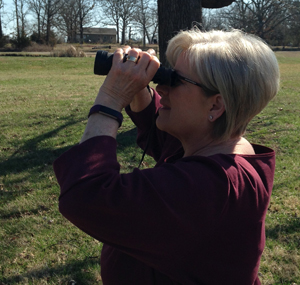



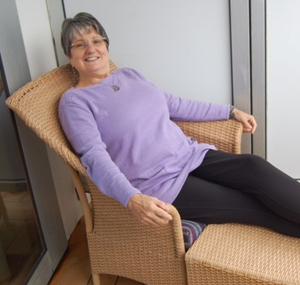
 Hiking over rough terrain and in cold temperatures is worth it to see the beauty of a glacier. On a recent Alaskan cruise from Anchorage to Vancouver, British Columbia, Katie and her husband hiked at Davidson Glacier in Alaska. “We had to hike over rough terrain to get to the glacier. There was a time I was not able to see well enough to hike with confidence. Now that I can see clearly, I feel able to take it on,” said Katie. “Every day I am grateful for my eyesight and the things I can accomplish.”

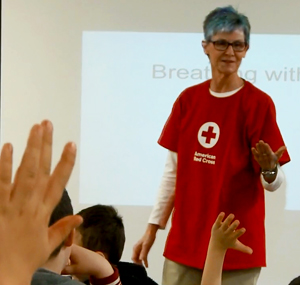
 For over 30 years, Barbara has made a difference in the lives of her students, first as an elementary public school teacher and later at the university level where she trained elementary, early childhood and special education educators to teach children at the most important times of development. At the heart of all she does is a passion for learning and education. Barbara is also an avid Mah Jongg player, enjoys making jewelry and loves to read. Now retired, Barbara continues to change lives by teaching university courses online and through her volunteerism with the American Red Cross.
 When Barbara was in her early 40s, her ophthalmologist identified that she had Fuchs’ dystrophy. Her doctors monitored the deterioration until it progressed to the point she needed a transplant. Barbara had an endothelia keratoplasty on her left eye in March 2015 and on her right eye in August 2015. An endothelial transplant replaces the deeper layers of the cornea and does not require stitches. Her transplants were both successful and Barbara is recovering well.