Industry News

Capturing a Beautiful World with Restored Sight
Ramona’s paintings capture colors of
the beautiful world that she can now see clearly.
Losing precious sight from corneal blindness can be an overwhelming and difficult experience for many. For Ramona, who experienced a decade of vision loss from posterior polymorphous corneal dystrophy (PPMD) and age-related macular degeneration (AMD), it was devastating. As a watercolor art hobbyist, Ramona relies on her vision to paint scenes and portraits. However, as her vision diminished, painting the world around her became increasingly difficult. Ramona struggled with vision loss for years.
“I would get up in the morning and have blurred vision. No one knew what it was,” she commented. The vision in her left eye, in particular, was troublesome. After undergoing cataract surgeries on both eyes, Ramona was then diagnosed with AMD- a disease that gradually destroys sharp central vision. She began treatment for AMD, but then suffered a hemorrhage in the left eye. Together, the AMD and damage from the hemorrhage caused spots of permanent loss in her central vision. But the remainder of the vision in her left eye was still blurry.
After visiting a specialist, it was determined that Ramona’s left cornea had a very low cell count. Eventually, she was diagnosed with PPMD- a fairly uncommon disorder that causes lesions on innermost layer of cells in the cornea. In March of 2011, Ramona underwent a corneal transplant to restore the remaining sight in her left eye.
Today, Ramona’s vision has improved drastically thanks to a caring individual who made the decision to become an eye donor. Although she still has areas of permanent vision loss and is undergoing treatment of AMD in both eyes, a new clear cornea has allowed her to paint again. “Painting is one hobby that I do not want to give up,” remarked Ramona.
After experiencing so many problems with her vision over the years, Ramona is a strong advocate to her friends and family reminding them to make regular visits to their eye care specialist. Early detection and treatment of vision conditions like AMD play a key role in reducing the extent of vision lost to this disease.
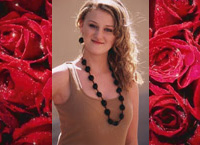
Saving Sight Honors Legacies of Eye Donor and Co-Worker in 2012 Tournament of Roses Parade
 On January 2, the lives of two incredible women close to the Saving Sight family will be honored during the 2012 Rose Parade.
The Eye Bank is participating in the 2012 Donate Life Rose Parade Float by sponsoring a floragraph- or floral portrait- of donor, Mariah West. After Mariah lost her life in a texting while driving accident, her family made the generous decision to donate her eyes, organs and tissue through the Eye Bank and Midwest Transplant Network. Today, Mariah’s mission of helping others is being carried on through her parents’ work with AT&T’s “It Can Wait,” texting safety campaign and the Mariah West Educational Foundation. You can read more about Mariah’s story on our web site and on the float’s web site.
The Eye Bank chose to honor Mariah’s donation in memory of Darian Vanderhoofven, our fellow colleague who lost her life in the Joplin tornado. Darian worked closely with both St. John’s Mercy Hospital and Freeman Health System in their annual local rose dedication ceremonies tied to the Donate Life float. At an April 2011 Celebration of Life event at Freeman, Darian was touched by the story of Mariah’s donation after meeting her mother.
Because of Darian’s direct involvement with planning for the local hospital rose dedications and her connection with Mariah’s family, we felt that sponsoring a floragraph of Mariah would be a very special way to also honor Darian’s work in promotion of eye donation. Donate Life America has also chosen to recognize Darian by placing a rose on the float in her memory – a dedication usually reserved for donors and recipients.
This year’s float theme is “…One More Day,” which will encourage viewers to imagine one more day to remember a loved one, celebrate life, keep hope alive, and make a difference to others. The float will feature six floral clocks adorned with 72 memorial floragraph portraits of deceased donors. A large 33-foot clock tower with an animated minute hand will move backwards in recognition of the many donors memorialized in tributes in the float’s dedication garden.
The Gift of Sight Has this Mom Cheering
For a busy mom with three boys ages eight through 12, clear vision is critical to running her kids to their favorite sports and watching them from the bleachers.
In 2000, Tammy of Sparta, Mo. was diagnosed with keratoconus, a disorder in which the cornea thins and becomes cone-shaped. Within 10 years, the condition completely altered Tammy’s life as she could no longer see details in anything she viewed. Tammy had to cut down on her hours at work and could only drive during the day if weather conditions were absolutely perfect. In addition, her contact lenses for the condition were no longer helping with vision, but in fact, just irritating her eyes. Worst of all, although she was able to cheer on her sons at their ball games, she could no longer see them out on the field.
In 2011, Tammy had two surgeries to help restore her vision. On her right eye, she underwent an Intacs procedure in which plastic inserts are implanted into the eye to revert the damaged cornea back into a dome shape. On her left, thanks to a generous donor family, Tammy receive a cornea transplant to save her sight.
The date of her transplant was incredibly relevant – she received her gift on Valentine’s Day. “I’m not going to forget the day, that’s for sure,” remarked Tammy. “It’s the best gift I could have received. I know what it’s going to do for me in the long run. When you lose sight, you lose a lot of your world.”
Although Tammy’s vision has not yet completely returned, her eyesight is better than it was. By following her doctor’s instructions, there is an excellent chance she will regain the majority of her vision within the next year.
“With this gift of sight I will be able to watch my three sons grown up and make a difference in our world. I will be able to see them score the winning goal in soccer, shoot that three pointer in basketball, perform in their school productions, and walk across the stage to accept their diploma. These are just a few of the things that I will now get to enjoy and see!”
For Tammy, her donor family has changed her life and the lives of the three boys who depend on her. “I don’t know them, but I feel like they’re part of my family. They did something so generous for someone they didn’t even know. It means the world to me – I can’t thank them enough.”
To learn how you can join Missouri’s eye, organ and tissue donor registry, please visit www.donatelifemissouri.com.

Eye Donation Touches Four Family Members
Connie was one of four members who suffered from Fuch’s dystrophy. A cornea transplant saved her sight.
Fuchs’ dystrophy, a disease that causes the cornea to deteriorate, is one of the main reasons why someone requires a cornea transplant. It’s also hereditary, often touching multiple family members.
Connie of Bentley, Kan., for instance, was the fourth person in her immediate family to be diagnosed with Fuchs’. Suffering from the same disease that affected her father, brother and twin sister, Connie knew a corneal transplant was her only option for better vision.
For years, Connie’s vision had been slowly deteriorating and soon affected her ability to drive at night or work on the computer – critical skills she needed to perform her jobs in human relations and as a Christian counselor. “I had to wear sunglasses all the time because there was too much sunlight coming in,” she remarked. “I also completely lost my night vision. I couldn’t drive anywhere; my poor vision took my freedom away.” In addition, Connie could no longer read in the morning – a hobby she always loved – since her eyesight would be foggy until late morning.
Finally, Connie underwent a cornea transplant on her left eye with tissue provided by a caring donor and their family. Within weeks, her vision slowly started returning, giving her the ability to enjoy her favorite activities and see her children and grandchildren. In fact, the eyesight in her left eye is now so strong, her doctor decided he could wait a few more years before performing a transplant on her right eye.
As someone who has received the gift of sight and understands the amazing generosity of donor families, Connie encourages her fellow Kansans to join the state’s new first-person consent donor registry. By signing up at www.donatelifekansas.com, you, not your family members, have the final say over your donation wishes.
“It’s so important to sign up,” said Connie. “You’re giving someone a second chance with your donation. You never know who that person’s going to be or what their situation is, but providing such a vital gift to them is tremendous.”

Thanks to His Eye Donors, Baseball Fan is Back Watching His Favorite Game
After receiving cornea transplants in both eyes, Jerry now has the eyesight he needs to watch a St. Louis Cardinals game.
For years, Jerry of Shell Knob, Mo. had adapted to his lifelong nearsightedness, but by 1996, his vision had grown considerably worse.
During a routine eye exam, his ophthalmologist made an unexpected discovery – Jerry was afflicted with Fuchs’ dystrophy, a disease that threatens both the corneas and a person’s entire vision. Jerry was told that by age 70, he would have to have corneal transplants on both eyes.
The condition did not limit Jerry’s duties in human resources and government training, but by the time he retired, the disease affected his ability to drive at night and to experience many of his favorite activities, including watching sports.
“I love sports, baseball in particular, but in the last several years, I didn’t enjoy going to a ballgame,” remarked Jerry. “I couldn’t follow the ball at night especially. I was becoming blind, so I just quit going.”
By 2009, Jerry knew he wouldn’t be able to see well enough to pass a driver’s test and decided to proceed with a corneal transplant on his right eye under the care of Dr. John Cowden of the Mason Eye Institute in Columbia. In February 2010, Dr. Cowden performed Jerry’s surgery on his left eye as well.
Today, thanks to the generosity of his eye donors’ families, Jerry has 20/25 vision in his right eye and 20/40 in his left – even without glasses. He can now see the faces of his nine grandchildren, enjoy the freedom of driving on his own, watch a play or performance, and yes, catch all the excitement of his favorite game.
Said Jerry, “My eyesight was progressing to the point where everything would be a blur, so I am so thankful for the Eye Bank program and the people selfless in thinking ahead and donating the tissue for use. My wife and I will both be donors when we pass away. I had always thought about it before, but it really comes home when it benefits someone as much as it has benefited me.”
To learn more about becoming an eye donor in the state of Missouri, please visit www.donatelifemissouri.com.

Tissue Donors Gifts Give Hope for Sight to Transplant Recipient
After many years of vision loss Kathy received hope for new sight from her donors.
In 2002 Kathy’s life was forever changed when she was broadsided by a driver who ran a red light while on his cell phone. Car battery acid hit both of Kathy’s eyes, causing grade 4 chemical burns. The chemical burns on her eyes caused complete limbal stem cell failure. Without limbal stem cells, Kathy’s corneas were not able to heal and her eyes became vascularized. She was told that she would have to prepare to go blind.
“Every day I’d wake up and wonder ‘How much sight am I going to lose today?’” Kathy recalled.
Kathy tried to prepare for the eventual vision loss. She learned tricks such as using color-coded keys and replacing items in cabinets in the same place each time to memorize their location. Kathy’s husband was instrumental in helping to set up the house to prepare for her vision loss- truly a team effort. However, she found that the hardest changes were her inability to work outside the home or drive a car. The loss of independence was difficult when within four months Kathy lost vision in both eyes.
She was told that regaining sight in her left eye would be hopeless, and the best they could hope for was to regain some sight in her right eye. Kathy received a limbal stem cell transplant with tissue from both a deceased donor and her daughter as a living donor. After about seven months the limbal stem cell transplant failed and Kathy remained legally blind in her right eye and completely blind in her left eye.
In 2005, Kathy’s doctor tried again to restore vision with a less common type of transplant known as a Boston Keratoprosthesis, or Boston KPro, in her left eye. In a Boston KPro transplant, the surgeon uses an artificial plastic cornea along with donor tissue to hold the artificial cornea in place. Just days after the transplant, Kathy was able to read the big E on the eye chart.
Two years later her doctor performed another KPro transplant on her right eye in an effort to restore some vision. This time, the donor tissue to help hold the artificial cornea in place was provided by a generous donor and their family from Heartland Lions Eye Banks. The transplant was also successful in restoring some lost vision.
Today, Kathy’s vision is not perfect but it is much improved from the complete blindness that she suffered from immediately after her accident.
“To those facing cornea transplants, remember that there is always hope as long as you are willing to try,” said Kathy. “You have to take that step to have hopethere is no hope if you don’t!”
As a recipient of multiple tissue transplants, Kathy feels committed to educating others about the importance of both organ and tissue donation and sight preservation. Shortly after receiving her second transplant from Heartland, Kathy was inspired to join her local Lions club. Today, she is incoming president of the Palmdale Lions club and volunteers with the club’s eye care assistance program.
Above all, Kathy is thankful for the gifts of sight that her donors were able to provide. Throughout the past nine years she had 13 ocular surgeries and benefited from the tissue donations of nine different individuals.
“I have a lot of people to thank when I get to heaven,” remarked Kathy.

Vision Restored to Kansas City Father of Two
Thanks to a transplant, Russ is able to clearly see the smiles on his daughters’ faces.
As busy parents, we rely on many things to help us balance a full work and home life. One of those things that we often take for granted is the ability to see clearly.
Thousands of individuals suffer from corneal blindness each year, limiting their vision and ability to perform everyday tasks such as driving the kids to school or reading a computer screen at work.
For Russ, living with effects of corneal blindness was a reality. In high school he was diagnosed with keratoconus- a condition in which the cornea becomes thin and cone-shaped causing vision distortion.
While his condition was corrected for many years with contact lenses it progressed in his early 30’s to the point where his doctor suggested a corneal transplant.
While the thought of corneal transplant surgery might have been daunting to some, Russ looked forward to the improvement in his visual quality. Working as an IT analyst was becoming a challenge with reduced vision.
“It was difficult at a computer all day,” recalled Russ. “I found myself using zoom a lot.”
Restored vision would also help Russ keep up with his two young daughters, ages 5 and 2, allowing him to enjoy seeing all of the milestones in their young lives with clarity.
Today, thanks to his legacy of his cornea donor, Russ is seeing clearly with 20/25 vision. While Russ has always been a member of his state’s organ and tissue donor registry, his support of donation has now taken on new meaning.
“My biggest reason for donating- why wouldn’t you help someone else to see,” said Russ. “It just doesn’t make sense not to be a donor.”
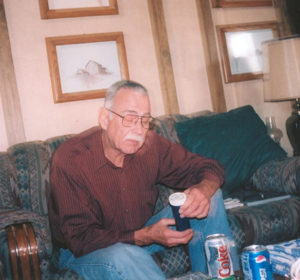
Donation Possible for Hospice Patients
Carl had no idea he could be an eye donor until his hospice nurse shared the facts about eye donation.
One of the biggest misconceptions about eye donation is that you can’t pledge to be a donor if you have cancer, diabetes or other chronic conditions.
However, since the cornea receives its oxygen from the air as opposed to the bloodstream, almost anyone with a noncommunicable condition can give the gift of sight.
For Carl of southwest Missouri, serving others had always been a passion for him. A former taxi and limo driver who retired in 2000, Carl had long helped people get where they needed to go. In 2010, he faced a decision whether or not to help two individuals on their own journeys out of blindness.
During his battle with pancreatic cancer, Carl was enrolled in hospice care where he learned about his options for donation from his nurses. After much soul searching and discussion with his wife, Rosalie, Carl made two decisions – to donate his body for the research of pancreatic cancer treatments and cures and to donate his eyes to Saving Sight.
Because of his decision, Carl, a father of three and an avid fisherman, helped two individuals once again see their families and enjoy their favorite activities with clear vision.
Said Rosalie, “I thought it was pretty neat Carl made the decision to donate. It would be so wonderful if we all made the pledge to do it!”

Corneal Transplant Surgery Gives New Vision to Kansas City Area Educator
Diane is grateful to her donor and their
family for the decision that saved her
sight.
As a retired educator, Diane can attest to the importance of developing good reading skills for success in life. However, when Diane’s vision began to deteriorate from keratoconus she got a whole new perspective on students who have difficulty reading.
“You just give up,” said Diane.
At age 30 Diane was diagnosed with keratoconus- a condition in which the cornea is abnormally cone-shaped, causing significant visual impairment. For many years she was able to wear glasses or contact lenses to correct her vision. However, over the last several years Diane’s condition reached a point where she could only wear contacts for a few hours, having to remove them because of the pain they caused. Without the corrective lenses she was legally blind- unable to read, drive at night, dial a phone or use a computer.
“It’s one thing to be at home and not be able to see,” said Diane. “It’s another to be in an outside environment.”
The physical limitations of being legally blind affected Diane’s ability to teach reading classes at a local community college. Essentially, life went on hold.
In November, Diane underwent a corneal transplant surgery to restore vision in her left eye. The transplant was successful, and today Diane can see more clearly and her vision continues to improve on a weekly basis. Next year she will undergo a transplant in the other eye.
After her transplant experience, Diane felt it was important to share her thanks with her donor’s family via the Eye Banks’ anonymous correspondence program.
“The fact that someone would do this for me or someone they don’t know- it’s like a soulful experience,” said Diane. “I feel like I am looking through someone else’s eyes. It’s life-changing, and I wanted to reach out and thank them.”
Diane had also experienced a loss when her oldest son was killed in a plane crash while serving in the U.S. Air Force. While she and her family knew that he wanted to be an organ and tissue donor, due to the circumstances of his death while serving our country donation was not an option.
Today, Diane is a proponent of the miracle of organ and tissue donation- not only because of her own experience but because she understands the healing that the very giving act of donation can have for grieving families.

Corneal Transplant is a Gift and Blessing for Kansas Woman
Today JoAnn volunteers with the Eye
Bank to encourage others to become organ and tissue donors.
Imagine a world where you cannot clearly see your loved one’s face or expressions. Sadly, this is a reality for thousands who suffer from corneal blindness. For many, the last option for clear vision is undergoing a corneal transplant surgery, allowing them to see the world again through the generosity and legacy of an eye tissue donor.
JoAnn of western Kansas struggled with poor vision for many years. In high school she was diagnosed with keratoconus- a condition is which the cornea becomes thin and cone-shaped, seriously distorting vision. For years, her condition was treated with special contact lenses. However, in 2005 the keratoconus progressed to a point where only a corneal transplant surgery would restore her vision.
After consulting with her surgeon, that fall JoAnn received a transplant that changed her vision forever. Her immediate reaction post-transplant was forever memorable.
“Oh my goodness, I can see my husband!” she recounted.
In addition, she can now see her two children and five grandchildren clearly. The transplant has given her the independence and ability to enjoy many aspects of life that she couldn’t because of keratoconus. Today, JoAnn is an active volunteer with the Eye Bank and has spoken about her experience as a transplant recipient in support of donation.
“Everyone should donate,” said JoAnn. “They had a cornea for me- that’s such a blessing. I thank the dear Lord everyday.”
Get the Latest in Your Inbox
Sign up below to receive Saving Sight’s quarterly round-up of industry news straight to your inbox. We will never share your information with third parties and you may unsubscribe at any time.