Industry News

Twin Brothers Undergo Sight-Saving Transplants on the Same Day
One generous donor family granted the gift of sight to two brothers.
As identical twins, Garry and Larry have shared a lot in common – careers in the insurance industry, a love for fishing, and unfortunately, Fuchs’ dystrophy, a genetic disease which slowly stole their eyesight over the years.
The only hope to restore their lost vision would be a cornea transplant in each of their eyes. In a unique twist of fate, the two brothers who shared so many things over the years were about to share something else – a date for their cornea transplants.
For years, poor eyesight had hindered both brothers’ lifestyles. Larry, for instance, was forced to retire early because he could no longer read clearly at work. In addition, the bad eyesight affected their favorite pastime. “My brother and I like to fish, but the Fuch’s made it very difficult,” said Larry. “Trying to tie a hook on to a line – now that was a lengthy process.”
In December 2010, a caring donor family made the heartfelt decision to donate their loved one’s eyes to save the vision of others. The corneas were offered by Saving Sight to Dr. Timothy Cavanaugh of Cavanaugh Eye Center in Overland Park, Kan. who immediately scheduled surgeries for the brothers on the same day.
Larry underwent the surgery on his right eye first, followed by Garry. It was only after the surgeries did the brothers learn their corneas were from the same donor.
While Larry and Garry are still in the recovery process, their sight has improved dramatically. Garry, who had a transplant on his left eye in October 2010, is seeing a significant difference in his eyesight already, and Larry will be undergoing a transplant on his left eye in 2011.
“We’re thrilled with how the transplants have turned out,” said Larry. “We have been dealing with this disease for some time, so the opportunity to get our transplants was wonderful.”
Because of their experience, Larry and Garry encourage others to consider joining their state’s eye and organ donor registry.
Remarked Larry, “When you’re asked at the DMV if you’d like to be a donor, you take it for granted. You think it’s not really a big deal, but it is a big deal to someone else. If you haven’t needed a heart or kidney or cornea, you might not appreciate it. But after getting our transplants, we have a whole new appreciation for what others have gone through.”
To learn more about joining a registry, visit www.donatelifemissouri.com in Missouri or Kansas’ new first-person consent registry at www.donatelifekansas.com.
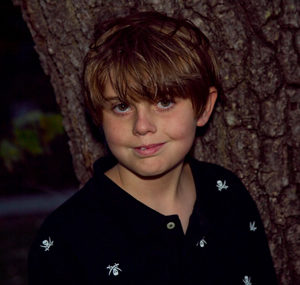
The Compassion of a Little Boy, The Strength of a Tiger
Mason changed the lives of two cornea recipients through the gift of sight.
From the moment he entered the world, Mason Kempf made an impact on everyone he met through his big smile and bigger heart. By the time he left this world in March 2011, that impact wrapped around the globe and showed complete strangers how one little boy can change the lives of many.
Mason was an intelligent, active child who loved Boy Scouts, soccer, video games and playing with his brother and sister. By second grade, he already planned to attend University of Missouri and become a scientist. However, a diagnosis of diffuse pontine giloma, a brain tumor, in April 2010 changed his path in life.
For the next several months, Mason received treatment at St. Jude Children’s Research Hospital in Memphis until finally his medical team acknowledged there was nothing more they could do. Mason was able to return to his hometown of Overland Park, Kan., and eventually spent the last weeks of his life in hospice care.
His mother Andria chronicled his journey at masonarik.blogspot.com – a touching site that struck a chord with readers. People immediately reached out to help – the Elves of Christmas Present worked on Christmas Eve to create a snow-covered wonderland to grant his holiday wish. In February, Valentine cards were received from around the world, cheering this brave fighter on.
Due to this outpouring of kindness, the family knew they had to find a way to help others. Once they were told there was no cure for Mason’s illness, his father began researching the possibility of eye and kidney donation, talking openly with Mason’s doctors and broaching the subject with hospice providers. Donation hit especially close to home since Mason’s grandmother, who has diabetes, will likely need a kidney transplant herself one day.
Said Andria, “We felt like what happened to us was so tragic, but from day one we looked for the good in the situation. If there was anything we could do for someone else, we would do it. We learned so much from our journey, especially in regards to compassion from complete strangers. It was up to us to give back to help someone else out.”
On March 29, 2011, Mason passed away at home. A few days later, cornea recipients in New York and California received his gift of sight.
Today, Mason’s kindness toward others is still being felt through one special project.
A Love for Tigers Lives on
Whether at home in Kansas City or during his treatment in Memphis, Mason loved spending his free time at each city’s zoo, in particular visiting his beloved tigers.
“On the day he was born, Mason received a giant stuffed tiger,” remarked Andria. “From that day on, he always loved tigers and felt a special connection to them, especially once he got sick. Tigers are brave and courageous just like he was. Plus, the tigers at the Kansas City Zoo are near extinction, so like Mason, they have their own battle to fight.”
Upon seeing the Memphis Zoo’s open, natural tiger habitat, Mason was looking forward to the Kansas City Zoo creating something similar for its own tigers. Spurred by Mason’s passion for the project, his parents met with Kansas City Zoo officials to see how they could help provide support the plan for its upcoming tiger exhibit renovation.
A memorial for Mason was soon set up at the Zoo to raise funds for the tiger sanctuary. On June 21, 2011, which would have been Mason’s tenth birthday, the Kempfs encouraged individuals to send a birthday card and donation to the Zoo’s memorial fund in honor of their son’s final wish. Contributions may continue to be sent to:
Kansas City Zoo
Attn: Laura Berger “In Memory of Mason Kempf”
6800 Zoo Dr
Kansas City, MO 64132
For additional details on Mason’s mission, please visit masonarik.blogspot.com.
Said Andria, “We’re hoping the exhibit will convey to people the person Mason was. He taught us to carry on and help in the lives of others. We want to impact other people so they too can make a difference and follow in his footsteps.”
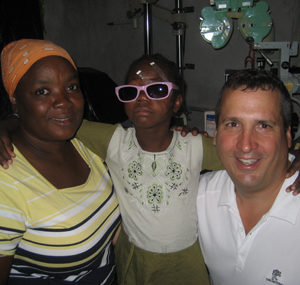
Sight Saved in Haiti Thanks to Saving Sight Partner in Sight
Dr. Andrew Moyes poses with 11 year-old Miriam who receive a second cornea transplant in 2011 with tissue provided by Saving Sight.
In a developing country like Haiti, vision loss can be a devastating blow to an individual’s ability to work and support one’s self, not to mention his or her entire family. Glaucoma, cataracts, corneal blindness – disorders that can be treated here in the U.S. – can sink a poor family into complete and desperate poverty. In Haiti, blindness can be lethal.
Yet, in the midst of this darkness, lies hope for thousands thanks to nonprofit organizations and mission groups as well as the dedicated volunteers who support them. Volunteers like our partner in sight, Dr. Andrew Moyes of Moyes Eye Center in Kansas City, MO, who has performed sight-saving surgeries on nine mission trips to Haiti, including corneal transplants using gratis donated tissue provided by Saving Sight.
An Ophthalmologist Discovers His Mission
When Dr. Moyes was first approached to donate his time at the Northwest Haiti Christian Mission (NWHCM), he made a financial contribution, but declined the invitation to Haiti. Soon after, as he watched a video on everything the Mission offered residents – the schools, feeding programs, birthing center, orphanages – he was moved to take his first Haitian mission trip.
In 2004, Dr. Moyes joined the surgical team at the NWHCM in the Northwest Zone of Haiti, the poorest state in the poorest country in the Western Hemisphere. On his first mission trip, Dr. Moyes and his fellow doctors performed 60 cataract surgeries; by his eighth trip in February 2011, that number grew to 162 performed in just four-and-a-half days.
In addition, the surgical team is trying to ease the devastating effects of glaucoma in the country. Said Dr. Moyes, “Glaucoma is so rampant in Haiti that one-fourth of people that we see in our clinic are blinded by the disease. Glaucoma isn’t even one of the World Health Organization’s priorities because it is so hard to treat.” However, through preventative eye exams, laser treatments to halt further vision loss, and glaucoma medications donated by Alcon and Allergan, the doctors are making headway.
“We’re trying to push back how quickly people go blind. Maybe Lord willing, someone will go blind in 12 years instead of two. When you see healthy 30 year-olds who want to work, but have no light perception because of glaucoma to perform a job, it’s enough to break your heart.”
Dr. Moyes also uses his expertise as a renowned corneal surgeon to save sight. In August 2011 for instance, he transplanted gratis tissue from the Eye Bank to restore vision to three individuals in need, including a 26 year-old male whose corneal scar affected his ability to work and an 18-year-old female who traveled from Port-au-Prince to this rural area of the country to save her vision.
But one transplant recipient who has stuck out in his mind is Miriam, an 11 year-old suffering from congenital hereditary endothelial dystrophy, a condition that thickens and clouds the cornea. Miriam received a corneal transplant in one eye two years ago – the result was so remarkable she was able to move from a special needs orphanage to one which provided her more independence. Because of a donor family’s incredible generosity here in the Midwest, Dr. Moyes was able to save her sight in her other eye, helping to provide her with a solid foundation for her future.
Continuing to Serve Both at Home and Overseas
The goal of these medical mission trips is not to perform the surgeries and walk away, but to truly help the Haitian people help themselves. Dr. Moyes and his colleagues are focused on teaching ophthalmologists in Haiti the skills they need to offer services throughout the year. In addition, because patient follow-up is so crucial after eye surgery, a Haitian ophthalmologist is available at NWHCM four days a month for follow-up exams and maintains contact with the medical team on any pertinent issues.
Even among the overwhelming circumstances – the backlog of patients, the country’s challenging infrastructure, the inability to help all who need assistance, Dr. Moyes finds hope and joy in the faces of those he’s helped. So much so that he has integrated his passion for the Haiti people into his professional life at Moyes Eye Center and into his personal life, now that his wife and four children often join him on mission trips.
“There’s not a day that goes by that I don’t think about what needs to be done, what we can do to make eye care better in Haiti. Seeing the joy in people’s faces when they realize they can see again brings such joy to my heart. As anyone on a mission trip will tell you – you go there to bring blessings to others, but you will be blessed a hundredfold by them. It feels so right to serve these people.”
We at the Eye Bank could not provide Dr. Moyes with gratis tissue for his mission trips without the compassion of donor families and the contributions of our generous financial supporters. To learn how you can pledge to give sight, whether around the world or in your own backyard, please visit our About Cornea Donation page.
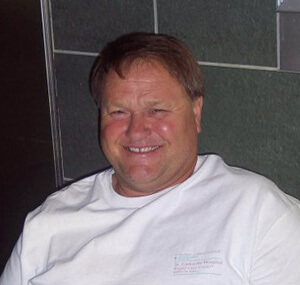
Lion’s Legacy Lives on Through Donation
 In McDonald, Kan., Duane Wilkens was long known as someone you could turn to for help in the community.
A grain elevator operator, father to three, and grandfather to seven, Duane devoted much of his free time to his family, yet still found time in his busy schedule to lend a hand to organizations in McDonald.
Duane was actively involved in the St. Joseph’s Church Policy Council, the Knights of Columbus, Cheyenne County Wild Life Board, the Cheylin School Board, and McDonald Area Development.
One group that was especially close to his heart was the McDonald Lions Club in which he was a member for 34 years. “The Lions’ motto is ‘we serve,’ and that is exactly what Duane liked to do…to serve and help others,” said Tish Loker, McDonald Lions Club member. “Whenever there was a need in the community and the club could be of service to that need, Duane made sure it got brought to the club’s attention and carried it through. He was always the one that had a huge hand in getting things rounded up and put together for the annual community events. He loved helping people and giving back to the community.”
Duane’s favorite time of year was the club’s Santa Claus day, an annual event which raised money for organizations in McDonald. Duane was always on hand with a big smile on his face, making sure all the families had a great time as they gathered to play games while their kids shared their wish lists with Santa.
When Duane passed away in February 2010, his family was asked if they wished to donate Duane’s corneas for transplant. Even during the most difficult time of their lives, Duane’s family didn’t think twice about helping their father’s caring spirit live on through two cornea recipients.
Duane’s children shared, “Dad always believed in helping others. So when it came time to decide on whether or not Dad’s gift of sight should be donated, there was no question. After all, this is what Dad always wanted. We know he would be so happy to hear that he was able to help others and pay it forward!”
You can join in honoring Lion Duane’s legacy by pledging to be an eye, organ and tissue donor to help those in need. Please visit www.donatelifekansas.com if you reside in Kansas or www.donatelife.net to find a registry in your state.
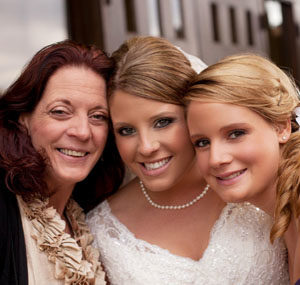
Cornea Recipient Thanks Those Who Made Her Transplant Journey Possible
Cate celebrates her daughter’s
wedding.
Where do I begin? So many people have contributed to my gift of vision this past year. They say it takes a community to raise a child. In my case, it took a community of compassionate professionals and individuals to provide me with the amazing gift of sight that I have to write this letter today.
I am a writer, both professionally as a grant writer and personally as a poet and story teller. I have had the pleasure of being published on multiple occasions and am proud when anyone takes the time to read my prose. My financial earnings support my family of three — myself, my elderly mother, and my daughter. I have been fortunate to be able to sustain our family with the proceeds of my written work. Seeing is everything to me.
When my vision began to fail in my right eye two years ago, it was a slow and mysterious process. I was by all respects a young woman of 50 with the eyesight of someone in their 70s. I went to one professional after another, trying to find the answers as to why this was happening. Multiple tests led to the resounding statement, “I / we don’t know why this is happening”. The “Why” part of the puzzle seemed to be the issue that stumped everyone that I had sought counsel. Everyone, that is, until I was referred to Dr. Joseph Tauber. He effectively determined the “Why” part of my condition and quickly moved to the “How” can we manage and improve the condition. The answer was a cornea transplant.
As February 2012 approached, I began preparing for the very necessary cornea transplant. Out of the blue, my left eye – my good eye began to show signs of illness. The pressure shot up to dangerous levels for no explainable reason. That is where the next big boulder dropped on me – glaucoma. Immediate surgery was required to save both eyes.
This is where multiple blessings and random acts of kindness appear on the path to full sightedness I have today. Hence, I begin the gratitude to so many people that have made this possible:
To: Dr. Michael Stiles who selflessly and without consideration to financial gains performed the surgeries installing two filtering systems that have controlled the glaucoma in both of my eyes and to Dr. Bret King who continues to monitor the systems with great honesty and compassion.
To: Dr. Joseph Tauber who has given both professionally and compassionately in a tireless effort to ensure I remain a sighted and productive individual.
And last, but certainly not least –
To: Heartland Lions Eye Banks (now known as Saving Sight) whose tissue donation had made my sight a reality. And to the family of the loved one who, during a time of great sorrow, demonstrated the selfless act of tissue donation. All the gifts and blessings that preceded my transplant would have been in vain, had it not been for your act of kindness. Your contribution has given me the most irreplaceable gift of all: sight. Equally, I am now an organ/tissue donor and promote donation at every opportunity presented.
Since my surgeries, I am maintaining a healthy level of sight and taking nothing for granted. I am back to driving without being in fear of the person who entered on what use to be my blind side. I see colors and hues so vividly, whereas before they were dull, lifeless, and quite undefined. I have continued to write and have written several funded grants that have given back to my community several fold. As I said earlier, “Seeing is everything to me” and I am so grateful and blessed to share my gift of sight with the world.
Blessings,
Cate

Clouds Lift for a Cornea Transplant Recipient
Each school day, first graders in Centralia, Kansas open their books and their minds thanks to one special teacher. As a Reading Recovery teacher, Marsha helps those children who are struggling with reading gain the skills they need to become stronger students.
Yet, until recently, Marsha was struggling with reading herself – only her issue was due to her declining vision.
At age 19, Marsha was diagnosed with Fuchs’ dystrophy, a genetic condition in which the cornea progressively deteriorates. By the time she was in her late thirties, her treatment included a constant regimen of eye drops, ointments and appointments.
The Fuchs’ dystrophy continued to worsen – the thick inner layer of her corneas collected moisture during the night, leaving her vision incredibly cloudy each morning and making both driving and reading extremely difficult.
Finally, in 2008, Marsha underwent a cornea transplant on her left eye, and in 2012, on her right eye. Although she faced complications with her initial transplant, today her vision is “amazing.” She no longer faces vision cloudiness every morning of her life and can now participate in her favorite activities, including exercising, traveling to see her grandchildren, and reading, with crystal clear vision.
Said Marsha, “I think of my donor often when I realize I’m reading the morning paper with no problems or looking up a phone number. I live in a little town, so traveling to the city on a weekend and being able to go early and face the sunlight is such a blessing. There’s such a feeling of independence with this gift.”
Marsha’s transplant also brought a new friend into her life – in Spring 2012, she and her most recent donor’s twin sister began corresponding regularly about their experiences, giving Marsha more insights into the woman who gave her the gift of sight.
In addition, the correspondence letters touched yet another person when Marsha shared them with a colleague whose husband had been an organ donor. The two coworkers were able to see first-hand both sides of the donation journey and the impact it has on some many people’s lives.
To learn more about joining the donor registry in Kansas, visit our donor page or the Donate Life Kansas website.
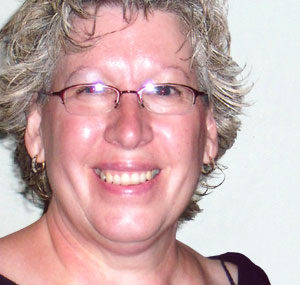
Cornea Transplant Opens New Chapter in Recipient’s Life
When you tell someone you work in a library, they automatically think you’re an avid reader. But for Denise from Hays, Kan., a part-time library employee, the opposite was true. Not because she didn’t love to read, but because a lifelong eye condition affected her vision so much she couldn’t. That is until a generous eye donor and a talented surgical team granted her the “gift of sight” through a cornea transplant.
For years, Denise had suffered from the effects of the ocular herpes virus – a communicable virus many are exposed to early in childhood. When breakouts occurred, Denise was often left with scars all over her cornea, eventually causing her to become legally blind in her right eye.
The condition caused limitations in Denise’s life. “I wrote really big so I could see better,” she said. “And whenever I was walking, I would have to look down the whole time to see if the surface was flat. If I came to steps, I would look for something to hold on to with my right hand or hang on to somebody.”
Finally, in 2004, Denise underwent a cornea transplant. According to Denise, the transplant experience went smoothly – she had no pain during the surgery or the recovery. In fact, she was awake and alert during the entire surgery, and her husband even got to watch the procedure.
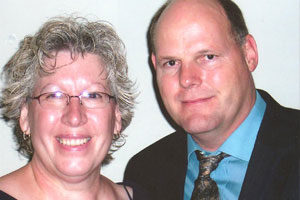 Best of all, only 24 hours after surgery, vision in her right eye went from 20/200 to 20/70, and today, it’s 20/30. Said Denise, “It’s remarkable! I just wanted some vision back – I got a lot more than I expected!”
Today, Denise is back to reading again. She’s also taken up cross-stitching – a hobby she loved, but hadn’t been able to do in 20 years due to her limited vision. In addition, Denise is able to drive at night, something she couldn’t do prior to surgery, giving her more freedom and mobility in her day-to-day life.
Denise is a wonderful example of how a generous eye donor can change one’s life so dramatically. “I would certainly tell anyone – you are giving a gift through your donation. Becoming a donor is something you need to consider, and you should let your loved ones know what your thoughts are. It’s just the right thing to do.”

Cornea Transplant Gives Recipient Independence Back
Larry is forever grateful to the donors
who gave the gift of sight to help him
see.
For years, Larry lived with the pain and inconvenience of an eye disease called keratoconus. The condition caused his corneas in both eyes to become cone shaped, leaving him with poor vision, constant headaches, eye pain and frequent eye infections.
The condition began to interfere with his daily activities. Larry had to depend on his “better” eye while at work. After work was done, he had to take his contacts out immediately, leaving him with virtually no vision during his time outside of work.
Eventually, Larry underwent two corneal transplant surgeries- one for each eye. Today, his vision is excellent- his vision has increased to 20/40 without glasses in both eyes. Larry is now able to live his life with total independence and has been able to get back to participating in all of his favorite hobbies that he had abandoned due to his poor vision.
Larry is forever grateful to the eye donors who gave the gift of sight to help him see. His donors’ families are always in his thoughts and he is grateful to them in helping to facilitate donation.
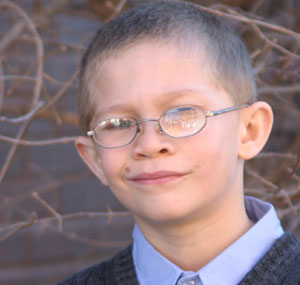
Young Cornea Recipient Shows Bravery in Face of Adversity
 For many young cornea recipients, receiving the “gift of sight” through a cornea transplant can be an anxious and frightening time. Occasionally, the Heartland Lions Eye Banks receives stories about young children who have been very brave in coping with the loss of vision and then regaining it through transplantation. However, once in a while we find a child whose bravery and courage is truly exceptional.
In April of 2003, five-year-old Kevin Lance of Skidmore, Missouri was rushed to the ER after a friend threw a stick that accidentally hit him in the eye. Kevin was immediately sent to Children’s Mercy in Kansas City where he had surgery to repair the corneal laceration. Although the laceration was repaired, the injury left a scar on Kevin’s cornea that blocked his vision.
The year that followed his initial surgery was very difficult as the doctor recommended patching Kevin’s good eye in order to strengthen the vision in the injured eye. Unfortunately, Kevin’s vision continued to deteriorate and his doctor decided that a cornea transplant was needed in order to save his sight. In June of 2004, Kevin, then six, received a cornea transplant.
A few days after the transplant Kevin accidentally ran into his sister while playing, causing one of his sutures to come loose. Due to the accident, Kevin was taken back into surgery the following day to repair the suture. Only a few weeks later, Kevin suffered another setback when his older brother accidentally hit him in the eye with his elbow. This injury caused Kevin more eye problems by rupturing his healing eye. Once again, Kevin went back into surgery where the doctor had to remove the lens of his eye.
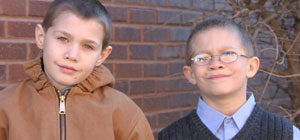 Since his last surgery, Kevin’s vision has improved tremendously and his brother and sisters are kept from “rough-housing” anywhere near him. As he continues to heal from the surgeries, his doctors and family anticipate that the next step in his recovery will be an intraocular lens implant as a result of the accidental incident with his brother.
“Kevin has been a very brave little boy through all of this,” said Kevin’s mother, Rebecca. “There were times when I didn’t think I was going to be able to handle everything but after what Kevin has been through and to see how he has dealt with the situation has inspired me.”

Eye Donor Saves the Sight of a Father and Husband
Robert’s new vision has made the time he spends with his son even more
special.
The need for a corneal transplant can strike any one at any age – whether it’s due to an ocular disease, disorder or injury. For 38 year-old Robert, his problem began in his late teens.
For 20 years, Robert suffered from kerataconus, a disorder which causes the dome-shaped cornea to distort into a cone shape, significantly affecting one’s vision. As is the case for many keratoconus sufferers, the disorder hit early in Robert’s life and progressed as he grew older.
Robert wore contact lenses to correct the problem and faced no trouble handling his day-to-day activities. “The vision problems were slow and gradual,” he remarked. “I pretty much got used to them.” However, by the time Robert entered his late thirties, his eyesight deteriorated to the point his eye surgeon recommended a corneal transplant to correct vision in his most seriously affected eye. In November 2009, Robert underwent surgery to transplant eye tissue from a 40-year-old eye donor.
“I went to Dr. Timothy Cavanaugh at Cavanaugh Eye Center who is just amazing. The first day or two of recovery was uncomfortable, but since then, my eyesight has significantly improved. It’s not 20/20, but I can see a lot better. It makes a huge difference in my life.”
Now when Robert sees a blue car, he no longer sees just a “blue blob,” but can instead easily identify the make and model. He has no trouble reading labels and has noticed his peripheral vision is considerably better. Robert enjoys playing poker with his friends, and can’t wait for the spring to see how his new eyesight will improve his softball and golf games.
Most important, thanks to the generosity of his eye donor, Robert’s new vision has made the time he spends with his one-year-old son even more special. “Every day my vision is getting better. I’m looking forward to playing soccer with my son when he gets older. Because of my new cornea, I’ll be able to watch him and coach him. When that happens, I’ll continue to think of the person who was gracious enough to donate their eyes to me.”
Although Robert has long been a supporter of donation, his own experience has increased his drive in promoting eye, organ and tissue donation. “I would encourage everybody to register as tissue donors for sure. Being able to see has added so much to my life. It’s such an amazing gift. My eye transplant was one thing – it’s hard to even fathom the difference it would make for people waiting for organ transplants. What an impact donation has on their lives!”
Visit the Saving Sight website to learn more about eye donation and how to become an eye, organ and tissue donor.
Get the Latest in Your Inbox
Sign up below to receive Saving Sight’s quarterly round-up of industry news straight to your inbox. We will never share your information with third parties and you may unsubscribe at any time.